
A Teaching Outline for the Book of Joshua
The comprehensive testimony of the prophets and apostles indicates that at the conclusion of the Church Age, the entire world will enter a seven-year period of tribulation and the Lord Jesus Christ will return to strike down the nations. Riding a white horse and wearing a robe dipped in blood, He will tread the fierce winepress of God’s wrath (cf. Isa. 63:3) to the effect that all who are on the receiving end of His sword will be justly slaughtered for their sins. He will then establish His kingdom in the Promised Land, dividing it into twelve districts—one for each of the tribes of Israel (cf. Ezek. 47:13). For a thousand years, He will demonstrate His sovereign supremacy by providing unparalleled safety, abundance, peace, and rest for all who have trusted in Him (cf. Isa. 32:18-20).
If those vivid details of prophecy aren’t enough to illustrate the events of the future, the vivid details of history should be. That’s because this coming conquest by Christ was not only foretold, but also foreshadowed—in the book of Joshua.
Picking up after the death of Moses, Joshua narrates the Israelites’ takeover of Canaan after their forty-year wandering in the wilderness. Through their military campaigns, the Israelites would serve as the instrument of God’s judgment upon the Canaanites for their sins, as well as the demonstration of God’s purposes to give the land to Abraham’s descendants (cf. Deut. 9:4-5).
God’s opening words to Joshua, the new leader of the nation, outline the four major sections of the entire book. First, God said, “Moses, My servant is dead; now therefore arise, cross this Jordan, you and all this people, to the land which I am giving to them, to the sons of Israel” (Josh. 1:2). The first section of the book describes Joshua assuming command of the nation and bringing them into Canaan (cf. Josh. 1:1-6:5).
Next, God said, “Every place on which the sole of your foot treads, I have given it to you, just as I spoke to Moses” (Josh. 1:3). The second major section of the book describes the conquest of Canaan, from the south to the north (cf. Josh. 6:6-12:24).
God then said, “From the wilderness and this Lebanon, even as far as the great river, the river Euphrates, all the land of the Hittites, and as far as the Great Sea toward the setting of the sun will be your territory” (Josh. 1:4). Third section describes the distribution of land to each of the tribes (cf. Josh. 13:1-21:45).
Finally, God said, “No man will be able to stand before you all the days of your life. Just as I have been with Moses, I will be with you; I will not fail you or forsake you” (Josh. 1:5). The book ends with a final section of Joshua’s parting words as an old man, recalling how God had never failed him (cf. Josh. 22:1-24:33).
After this opening word from the Lord, Joshua reminded the people that God’s promise was the basis upon which to fight valiantly in Canaan: “Remember the word which Moses the servant of the Lord commanded you, saying, ‘The Lord your God gives you rest and will give you this land’” (cf. Josh. 1:13). Bolstering that promise, God then provided a miraculous Jordan River crossing, reminiscent of the Red Sea crossing, to show that the omnipotent God who helped the nation in the past would do so once again (cf. Josh. 3:14-17). Finally, as if that weren’t enough, God appeared to Joshua in a theophany (physical manifestation of Himself), even going so far as to to say, “Remove your sandals from your feet, for the place where you are standing is holy” (Josh. 5:15). By meeting Joshua in a similar manner as He met Moses (cf. Josh. 3:7), God made it crystal clear that He would empower this next-generation leader, which put an exclamation mark on the command to “be strong and courageous!” (Josh. 1:9).
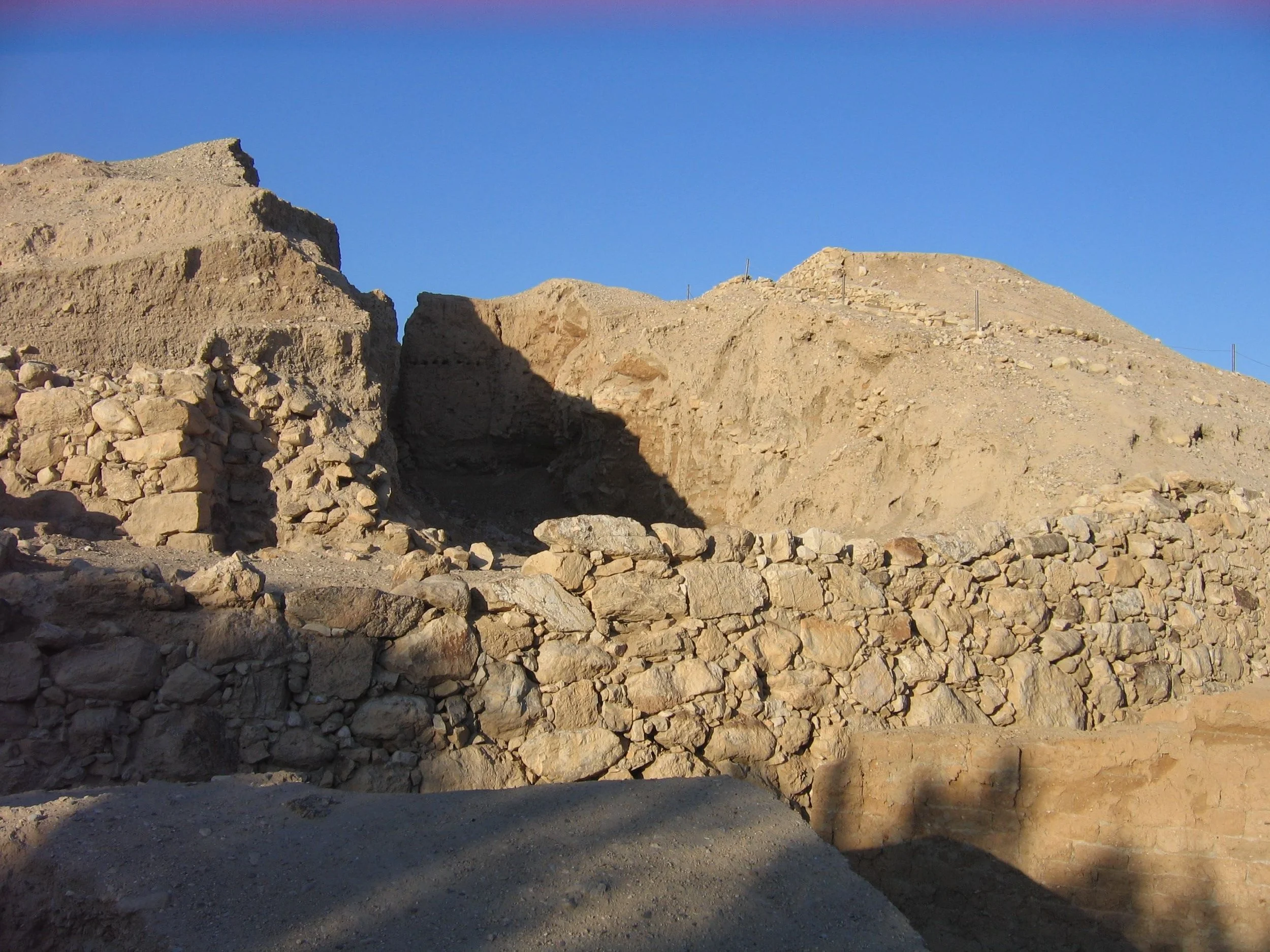
The most memorable demonstration of this divine power came right at the beginning of the invasion, in which the city of Jericho was miraculously demolished. Although the Israelites did not have the military capability to raze the city, God did. And that’s all that mattered (cf. Psa. 33:16-17). The Israelites only needed to recognize that success would be “not by might nor by power, but by My Spirit” (Zech. 4:6). And so it was that “by faith the walls of Jericho fell down after they had been encircled for seven days” (Heb. 11:30).
Yet, not every citizen of Jericho perished in the collapse. One woman, along with her family, recognized the imminent danger from Yahweh and decided to help the Israelite spies during their reconnaissance mission (cf. Josh. 2:8-13). She determined to “show discernment… take warning… worship the Lord... and rejoice with trembling” (Psa. 2:10-11). And through repentance of her false gods and faith in Yahweh, she was saved (cf. Psa. 2:12). “By faith Rahab the harlot did not perish along with those who were disobedient, after she had welcomed the spies in peace” (Heb. 11:31). Although Rahab played a minor role in the overall narrative of Jericho’s destruction (the city would have been destroyed with or without her help), she played a major role in the narrative of redemptive history, being an ancestress in the biological line of Jesus (cf. Matt. 1:5). Like all of the elect, her salvation was part of God’s plan all along. Furthermore, her redemption from a life of immorality to a life of godliness serves as an encouraging model for all who would otherwise think themselves to be too far gone for redemption. “For You, Lord, are good, and ready to forgive, and abundant in lovingkindness to all who call upon You” (Psa. 86:5).
After an initial defeat at the next city of Ai, on account of hidden sin that was eventually discovered (cf. Josh. 7:6-12, Num. 32:23), the Israelites returned to battle with the Lord’s help. The defeat of the inhabitants of Ai culminated in the hanging of their king on a tree as a sign that their destruction was an act of God’s divine judgment, not man’s imperialistic ambition (cf. Josh. 8:29, Deut. 21:23). Those today who preposterously view the Canaanite conquest as a form of “human genocide” need to likewise reckon with their own sin, lest they too suffer judgment from God throughout eternity. Only two options exist for us as sinners: we can bear our own curse, or we can trust in the Savior who hung on a tree as a curse for His people (cf. Gal. 3:13, 2 Cor. 5:21). One way or another, justice will be served.
Beginning in the south and then moving to the north, Joshua’s military offensive rapidly progressed. The repeated phrase “utterly destroyed” (Josh. 10:28, 35, 37, 39, 40) indicated the comprehensive destruction of Canaan. But it also served as a foretaste of worldwide judgment in the coming Day of the Lord. Just as the Canaanite kings tried to hide from Joshua in caves (cf. Josh. 10:16), so too will men “go into caves of the rocks and into holes of the ground before the terror of the Lord and the splendor of His majesty, when He arises to make the earth tremble” (Isa. 2:19). And just as the former found no success in their strategy, neither will the latter. The hailstones God hurls upon the world in the future bowl judgment will hit their intended targets just as did the hailstones He hurled upon the Amorites who fled from Joshua (cf. Josh. 10:11). In view of these miraculous signs, those of us today may wonder, Why would king after king continue to fight against the Israelites despite seeing the failure of neighboring kings (cf. Josh. 10:1-5)? It’s because God intended it to be so: “For it was of the Lord to harden their hearts, to meet Israel in battle in order that he might utterly destroy them, that they might receive no mercy, but that he might utterly destroy them, just as the Lord had commanded Moses” (Josh. 11:20).
And just as the Potter hardened the clay of those Canaanite cities in order to glorify Himself in their military defeat, so too does the Potter harden the clay of the non-elect in order to glorify Himself in their eternal destruction (Rom. 9:16-18). As the Apostle Paul explained in his letter to the Romans, “So then He has mercy on whom He desires, and He hardens whom He desires” (Rom. 9:15). The very nature of grace is that it does not have to be offered equally—which is why Christians ought to praise God all the more for their salvation!
At the conclusion of Joshua’s military operation, he recorded an itemized list of the defeated kings which essentially served as a list of thanksgiving to God (cf. Josh. 12:1-24). Rather than a generic offering of an obligatory word of appreciation, this list reminds us to count our blessings in prayer—naming them one by one—not because God has lost track (cf. Luke 12:7), but because we so often do. Rather than carrying on post-victory life as usual, Joshua recorded the precise outworking of God’s promise, fulfilled by God’s power, to hand over the land of Canaan to the nation of Israel. This was a complete victory by the King of kings. In that way, the list of defeated kings also serves as a theological down payment on the greater promise to come, when “the kingdom of the world has become the kingdom of our Lord and of His Christ; and He will reign forever and ever” (Rev. 11:15, cf. Dan. 7:23-27). If you question whether or not Christ will return to demolish the future kings of the earth, just look at what He did to the former kings of Canaan.
The land of Canaan was then divided and apportioned to each tribe.
After fulfilling their vow to help their fellow Israelites, the tribes of Reuben, Gad, and half-Manasseh returned to their Transjordan territories. The sons of Reuben received a diminished inheritance, despite being descendants of the firstborn, which fulfilled Jacob’s prophecy that he would “not have preeminence” (Gen. 49:3-4). Gad’s large borderland fulfilled Moses’ prophecy that he would get a “ruler’s portion” of the land (Deut. 33:20-21). Yet, being on the border of pagan nations meant that Gad would also be frequently raided and attacked, in fulfillment of Jacob’s prophecy (cf. Gen. 49:19). Finally, the half-tribe of Manasseh received exceptional pastureland, due to Joseph’s favored status from God (cf. Gen. 49:22-26, Deut. 33:13-17). Truth be told, these tribes would have done better to wait to receive land in Canaan, rather than take desired locations east of the Jordan River; nevertheless, these prophetic fulfillments demonstrate that God is sovereign even over the wrong decisions of men (cf. Isa. 10:5-12). He governs all things toward their appointed end, allowing believers to rest in His sovereignty in the worst of circumstances. God is always in control.
With the help of Eleazar, Joshua cast lots at the tabernacle in order to divide up the Promised Land among the remaining tribes. By casting lots, Joshua submitted every selection to the Lord (rather than ignore God’s counsel as he had previously, cf. Josh. 9:14-15). “The lot is cast into the lap, but its every decision is from the Lord” (Prov. 16:33). The allocation of the land was God’s plan for God’s people; it needed to be done according to God’s choice.
First off, Caleb received a special inheritance of his own in the fields and villages surrounding the city of Hebron (cf. Josh. 14:14, 21:11-12). When requesting this location, Caleb recounted his faith in God, referring five times to the promises of Yahweh that he believed wholeheartedly: “Now then, give me this hill country about which the Lord spoke on that day” (Josh. 14:12, cf. Josh. 14:6, 10). As one of only two faithful spies from over forty years prior, it was his God-given faith that upheld him to stand on God’s Word in the face of an entire generation of naysayers—just as it is for believers today who will not bow to the spirit of the age. The result? Caleb’s faith eventually became sight, when he witnessed the capturing of Canaan that he knew was possible decades beforehand. It will be so for believers today, too, when we enter the coming Kingdom we long for (cf. Rom. 8:24-25, Heb. 11:1-2).
The first tribe to receive an inheritance in Canaan was “the sons of Judah” (Josh. 15:1). Not only was their portion a large and preeminent area of land—fit for a king!—but by receiving it first, they recognized God’s special plan for them. As Jacob had said, “Judah, your brothers shall praise you” (Gen. 49:8) and, “The scepter shall not depart from Judah” (Gen. 49:10). Moses similarly prophesied, “With his hands he contended for them” (Deut. 33:7), indicating that Judah would rise up and be an advocate for the other tribes.
The next two lots were cast “for the sons of Joseph” (Josh. 16:1). Because of Joseph’s favored status from God, the tribes of Ephraim and Manasseh were both prophesied to receive exceedingly blessed land. Jacob foretold that God would bless them “with blessings of heaven above, blessings of the deep that lies beneath, blessings of the breasts and of the womb” (Gen. 49:25). Moses similarly said, “Blessed of the Lord be his land, with the choice things of heaven, with the dew, and from the deep lying beneath, and with the choice yield of the sun, and with the choice produce of the months” (Deut. 33:13-14). Interestingly enough, of the two tribes, it was those of Ephraim who received their land first, (cf. Josh. 16:5) followed by Manasseh (cf. Josh. 17:1), even though Manasseh had been the firstborn son of Joseph. But even this, too, had been prophesied. When blessing Joseph’s sons hundreds of years prior, Jacob put his right hand on the younger grandson (Ephraim), rather than the older (Manasseh), indicating that the younger would end up being a more prominent tribe than the older. “Thus he put Ephraim before Manasseh” (Gen. 48:20). And indeed, as it turned out, the tribe of Ephraim not only received territory of central prominence, but would become the key tribe representing the entire northern kingdom years later (cf. Jer. 31:9, Ezek. 37:16). As with Jacob and Esau, this reversal of blessings demonstrates the sovereignty of God to work in ways that are contrary to man’s normal expectations. Even the Gospel itself follows this theme: the last will be first (cf. Matt. 19:30), the humbled will be exalted (cf. Luke 14:11), and those who lose their lives for Christ will find it (cf. Matt. 10:39).
The next lot was cast for “the sons of Benjamin” (Josh. 18:11). With a centrally located territory that was safe and secure, being bordered on all sides by other tribes, this lot fulfilled Moses’ prophecy: “May the beloved of the Lord live in security beside Him who shields him all the day long, and he lives between His shoulders” (Deut. 33:12). In fact, Benjamin’s providential safety was proven centuries later when it was one of the most identifiable tribes to return after Babylonian exile: “Then the heads of fathers’ households of Judah and Benjamin and the priests and Levites arose, even everyone whose spirit God had stirred to go up and rebuild the house of the Lord which is in Jerusalem” (Ezra 1:5). The safety of this beloved tribe points to an even greater safety for all of God’s beloved elect: “For I am convinced that neither death, nor life, nor angels, nor principalities, nor things present, nor things to come, nor powers, nor height, nor depth, nor any other created thing, will be able to separate us from the love of God, which is in Christ Jesus our Lord” (Rom. 8:38-39).
The lot for Simeon came next (Josh. 19:1). Based on Jacob’s prophecy for this son, God was going to “disperse them in Jacob, and scatter them in Israel” (Gen. 49:7). This came to pass precisely as stated, when Simeon’s land allotment was entirely surrounded and subsumed by Judah’s territory. Such an arrangement highlights the truth that God’s keeps His promises with specificity. He is meticulously sovereign over every event in the world, governing all things toward His predetermined ends (cf. Eph. 1:11). “Chance” is but a pagan concept. “Fortune” is nothing more than a false god. “Luck” exist only in the imaginations of fallen men. It is Yahweh who declares the end from the beginning, establishes His purposes, and accomplishes all His good pleasure in heaven and on earth (cf. Isa. 46:10).
The inheritances for Zebulun, Issachar, and Asher were next to be issued, all of which related to the abundance and blessing they would received in the land (cf. Josh. 19:10, 17, 24). With an area extending to the Mediterranean Sea, bringing prosperity through sea trade, Jacob’s prophecy that “Zebulun shall dwell at the seashore” (Gen. 49:13) and Moses’ prophecy that Zebulun would “draw out of the abundance of the seas” (Deut. 33:19) came to pass. Issachar’s allotment in one of the most fertile areas of all, the Jezreel Valley, fulfilled Jacob’s prophecy that his tribe would see “that the land was pleasant” (Gen. 49:15). The tribe of Asher received northern land famous for an abundance of valuable olive groves, just as it was said by Jacob that “his food shall be rich” (Gen. 49:20) and by Moses that he would “dip his foot in oil” (Deut. 33:24), having so many olives that he would able to use the oil not only for his face but even for his feet. Although the Christian’s life in this present age is often one of poverty and difficulty (cf. Acts 14:22, 2 Tim. 3:12-13), life in the coming kingdom will be one of exceeding abundance and ease (cf. Ezek. 47:5-12). “The Lord of hosts will prepare a lavish banquet for all peoples on this mountain; a banquet of aged wine, choice pieces with marrow, and refined, aged wine” (Isa. 25:6).
Naphtali’s lot was cast next (cf. Josh. 19:32). Receiving land that encompassed the Sea of Galilee perfectly demonstrated the prophecy of Moses that this tribe would “take possession of the sea and the south” (Deut. 33:23). And as with every prophecy, the reason God knew the future for this tribe is not because He “looked down the corridors of history,” as if He could learn anything (which would undermine His omniscience and immutability) or be contingent upon His creation (which would undermine His aseity and transcendence). Rather, God knew the future because He ordained it. In fact, this tribe’s allotment of land would end up as one of the primary ministry areas of Jesus: “…and leaving Nazareth, He came and settled in Capernaum, which is by the sea, in the region of Zebulun and Naphtali. This was to fulfill what was spoken through Isaiah the prophet” (Matt. 4:13-14).
The final tribal lot was cast for “the sons of Dan” (Josh. 19:40). Although their initial land inheritance was in the south, they expanded to the north—like an aggressive lion—to take over the city of Leshem in the region of Bashan (cf. Josh. 19:47). Unsurprisingly, Moses said this would happen: “Dan is a lion’s whelp, that leaps forth from Bashan” (Deut. 33:22).
Just as the land allotments began with the faithful spy Caleb, so they concluded with allotments to the only other faithful spy, Joshua (cf. Josh. 19:49). Cities were then designated for judicial proceedings (cf. Josh. 20:1-3) as well as for the Levites (cf. Josh. 21:1-3). Throughout the land distributions for the other tribes, Joshua was quick to note that the Levites received no land, but rather the privilege of being able to serve God at the tabernacle (cf. Josh. 13:14, 13:33, 14:3, 18:7). This was an intentional reminder to God’s people that the Promised Land was less about the gift and more about the Giver. As Psalm 16:5 notes, “The Lord is the portion of my inheritance.” With cities scattered throughout the entire nation, the Levites would be able to provide this constant reminder to the rest of the tribes, teaching them the Scriptures so they could keep their eyes fixed on God (cf. Deut. 33:10, 2 Chron. 17:7-9).
The catalogue of distributed land reached its climax with the statement, “Not one of the good promises which the Lord had made to the house of Israel failed; all came to pass” (Josh. 21:45). Theologically, it was the equivalent way of saying, “He who began a good work in you will perfect it until the day of Christ Jesus” (Phil. 1:6). Thus, Joshua’s emphasis was on God’s power at work: “The Lord gave Israel all the land” (Josh. 21:43) and “The Lord gave them rest” (Josh. 21:44). With man, the taking of Canaan would have been impossible, but with God all things are possible (cf. Matt. 19:26). The same is true for an individual’s salvation. Though the will of man is enslaved to sin in his natural state, leaving him utterly unable to do anything for his salvation—including understanding the Gospel!—God can make it happen. The Lord can grant a heart to know, eyes to see, and ears to hear. The Lord can cause a man to be born again. The Lord can give man the very repentance and faith he needs to be saved. And with it all, the Lord can give righteousness and rest.
After Joshua’s concluding farewells, Scripture records, “It came about after these things that Joshua the son of Nun, the servant of the Lord, died, being one hundred and ten years old. And they buried him in the territory of his inheritance in Timnath-serah, which is in the hill country of Ephraim, on the north of Mount Gaash” (Josh. 24:29-30). Far from being a benign detail, the burial of Joshua’s bones (as well as Joseph’s, cf. Josh. 24:32) in the Promised Land indicated a commitment to something far greater to come: resurrection! Because his bones were laid in the Promised Land, the first thing he’ll see at the resurrection, with his newly glorified eyes, is the permanent fulfillment of God’s promise. And with that new body, Joshua won’t have to enter the Kingdom of God—he’ll already be there!
Based on that necessary future event, it’s evident that although Joshua gave the nation “rest from war” (Josh. 14:15), he couldn’t give them rest from sin and death. In fact, until the nation of Israel trusts in Jesus as their promised Messiah, they will find no rest for their souls. “For if Joshua had given them rest, He would not have spoken of another day after that. So there remains a Sabbath rest for the people of God” (Heb. 4:8-9). And not only would the ancient Israelites’ own sin become a problem, they would continue to be troubled by the sins of the Canaanites, whom they did not thoroughly destroy in keeping with the judgment and justice of God. Several sobering notes in the book of Joshua make this clear: “But the sons of Israel did not dispossess the Geshurites or the Maacathites; for Geshur and Maacath live among Israel until this day” (Josh. 13:13, cf. Josh. 15:63, 16:10, 17:12-18, Judg. 1:27-36). The pagan lifestyle of the Canaanites would prove to be infectious, exactly as Moses warned (cf. Deut. 7:1-5, 20:16-18).
On the other hand, when Christ returns to establish His kingdom He will deal His enemies thoroughly: “‘It will come about in that day,’ declares the Lord of hosts, ‘that I will cut off the names of the idols from the land, and they will no longer be remembered; and I will also remove the prophets and the unclean spirit from the land’” (Zech. 13:2). And so it is that Joshua’s inadequate takeover of the Promised Land reminds us that until the Lord returns, there will be no legitimately Christian nation (cf. John 18:36). The kingdom of God will not be built by a mere man on earth; it will be brought by the God-man from heaven (cf. Dan. 2:44-45).
As you teach through the book of Joshua verse by verse, looking beyond Israel’s possession of Canaan to the coming worldwide conquest by Christ, remind your hearers that “blessed are all who take refuge in Him!” (Psa. 2:12). The following outline is offered to help.
The Motivation for Entering the Land (Joshua 1:1-18)
Conquest Guaranteed by God’s Promise (Josh. 1:1-4)
Courage Grounded in God’s Presence (Josh. 1:5-9)
Commands Given for God’s Plan (Josh. 1:10-15)
Commitment Garnered from God’s People (Josh. 1:16-18)
The Mission to Scout Out the Land (Joshua 2:1-24)
Sending of the Spies into Jericho (Josh. 2:1)
Safeguarding of the Spies from the King (Josh. 2:2-7)
Statement of Faith from Rahab (Josh. 2:8-13)
Stipulations for Protection from Israel (Josh. 2:14-21)
Summary to Joshua of God’s Faithfulness (Josh. 2:22-24)
The Miracle for Crossing into the Land (Joshua 3:1-17)
Ordered Formation Showing God’s Holiness (Josh. 3:1-6)
Ordained Plan Showing God’s Immanence (Josh. 3:7-13)
Open River Showing God’s Omnipotence (Josh. 3:14-17)
The Memory of Crossing into the Land (Joshua 4:1-24)
Stones on the River Bank (Josh. 4:1-8)
Stones in the River Bed (Josh. 4:9-14)
Significance of the River Blessing (Josh. 4:15-24)
The Marks of Crossing into the Land (Joshua 5:1-6:5)
Circumcision of the Men (Josh. 5:1-7)
Celebration with a Meal (Josh. 5:8-10)
Cessation of Manna (Josh. 5:11-12)
Certainty from a Messenger (Josh. 5:13-6:5)
Destruction of Jericho (Joshua 6:6-27)
Faith in God during a Six-Day March (Josh. 6:6-14)
Fall of the City in a Seventh-Day Miracle (Josh. 6:15-21)
Freedom for Rahab in Saving Mercy (Josh. 6:22-27)
Defeat at Ai (Joshua 7:1-26)
Wrath Aroused by Achan’s Sin (Josh. 7:1)
Warriors Afflicted by the Enemy’s Sword (Josh. 7:2-5)
Worry Alleviated by God’s Solution (Josh. 7:6-15)
Wickedness Admitted after Joshua’s Searching (Josh. 7:16-23)
Wrath Averted by Achan’s Stoning (Josh. 7:24-26)
Destruction of Ai (Joshua 8:1-35)
Comforting Guidance from God (Josh. 8:1-2)
Communicated Strategy to the Nation (Josh. 8:3-8)
Coordinated Positions for the Soldiers (Josh. 8:9-17)
Complete Devastation of the City (Josh. 8:18-29)
Corporate Worship of God (Josh. 8:30-35)
Deception from Gibeon (Joshua 9:1-27)
Fearful Alliance of Nations (Josh. 9:1-2)
Fraudulent Appeal for Peace (Josh. 9:3-13)
Foolish Agreement without God (Josh. 9:14-15)
Faithful Adherence to the Oath (Josh. 9:16-21)
Favorable Assignment for Service (Josh. 9:22-27)
Destruction of Southern Canaan (Joshua 10:1-43)
Summoning of Canaanite Cooperation (Josh. 10:1-5)
Signs of Cosmic Control (Josh. 10:6-15)
Symbols of Cursed Condemnation (Josh. 10:16-27)
Series of Comprehensive Campaigns (Josh. 10:28-40)
Source of Complete Conquest (Josh. 10:41-43)
Destruction of Northern Canaan (Joshua 11:1-23)
Summoning of Canaanite Cooperation (Josh. 11:1-5)
Slaughter by Cosmic Control (Josh. 11:6-15)
Series of Comprehensive Campaigns (Josh. 11:16-18)
Source of Complete Conquest (Josh. 11:19-20)
Success throughout the Captured Country (Josh. 11:21-23)
Dominance by the King of Kings (Joshua 12:1-24)
Victory over the Southern Transjordan King (Josh. 12:1-3)
Victory over the Northern Transjordan King (Josh. 12:4-6)
Victory over the Southern Canaanite Kings (Josh. 12:7-16)
Victory over the Northern Canaanite Kings (Josh. 12:17-24)
Allotment for the Tribes of Reuben, Gad, and Half-Manasseh (Joshua 13:1-33)
Perishing Leader Comforted (Josh. 13:1-7)
Preferred Location Considered (Josh. 13:8-12)
Problematic Legacy Chronicled (Josh. 13:13-14)
Preferred Location Claimed: Reuben (Josh. 13:15)
Prophesied Location Confirmed: Diminished Area (Josh. 13:16-23)
Preferred Location Claimed: Gad (Josh. 13:24)
Prophesied Location Confirmed: Large Borderland (Josh. 13:25-28)
Preferred Location Claimed: Half-Manasseh (Josh. 13:29)
Prophesied Location Confirmed: Abundant Pastureland (Josh. 13:30-33)
Allotment for Caleb (Joshua 14:1-15)
Partitioned Land Clarified (Josh. 14:1-5)
Preferred Location Considered (Josh. 14:6-12)
Preferred Location Claimed: Caleb (Josh. 14:13-15)
Allotment for the Tribe of Judah (Joshua 15:1-63)
Providential Lot Cast: Judah (Josh. 15:1)
Prophesied Location Confirmed: Preeminent Area (Josh. 15:2-12)
Parceled Lot Claimed: Achsah (Josh. 15:13-20)
Populated Location Catalogued (Josh. 15:21-62)
Problematic Legacy Chronicled (Josh. 15:63)
Allotment for the Tribe of Ephraim (Joshua 16:1-10)
Providential Lot Cast: Ephraim (Josh. 16:1-4)
Prophesied Location Confirmed: Central Prominence (Josh. 16:5-9)
Problematic Legacy Chronicled (Josh. 16:10)
Allotment for the Half-Tribe of Manasseh (Joshua 17:1-18)
Providential Lot Cast: Half-Manasseh (Josh. 17:1-6)
Prophesied Location Confirmed: Abundant Farmland (Josh. 17:7-11)
Problematic Legacy Chronicled (Josh. 17:12-18)
Allotment for the Tribe of Benjamin (Joshua 18:1-28)
Pending Locations Considered (Josh. 18:1-10)
Providential Lot Cast: Benjamin (Josh. 18:11)
Prophesied Location Confirmed: Safe and Central Area (Josh. 18:12-28)
Allotment for the Tribes of Simeon, Zebulun, Issachar, Asher, Naphtali, and Dan (Joshua 19:1-48)
Providential Lot Cast: Simeon (Josh. 19:1)
Prophesied Location Confirmed: Dispersion Among Others (Josh. 19:2-9)
Providential Lot Cast: Zebulun (Josh. 19:10)
Prophesied Location Confirmed: Mediterranean Coast Access (Josh. 19:11-16)
Providential Lot Cast: Issachar (Josh. 19:17)
Prophesied Location Confirmed: Fertile Jezreel Valley (Josh. 19:18-23)
Providential Lot Cast: Asher (Josh. 19:24)
Prophesied Location Confirmed: Rich Olive Groves (Josh. 19:25-31)
Providential Lot Cast: Naphtali (Josh. 19:32)
Prophesied Location Confirmed: By the Sea of Galilee (Josh. 19:33-39)
Providential Lot Cast: Dan (Josh. 19:40)
Prophesied Location Confirmed: Expansion up to Bashan (Josh. 19:41-48)
Allotment for Joshua and Justice (Joshua 19:49-20:9)
Preferred Location Claimed: Joshua (Josh. 19:49-50)
Provided Locations Completed: All Tribes (Josh. 19:51)
Proposed Locations Considered: Cities of Refuge (Josh. 20:1-6)
Proposed Locations Confirmed: Canaanite Cities of Refuge (Josh. 20:7)
Proposed Locations Confirmed: Transjordan Cities of Refuge (Josh. 20:8-9)
Allotment for the Tribe of Levi (Joshua 21:1-45)
Promised Locations Claimed (Josh. 21:1-3)
Providential Lot Cast: Priestly Kohathites (Josh. 21:4)
Providential Lot Cast: Non-Priestly Kohathites (Josh. 21:5)
Providential Lot Cast: Gershonites (Josh. 21:6)
Providential Lot Cast: Merarites (Josh. 21:7)
Provided Locations Catalogued: Cities of Priestly Kohathites (Josh. 21:8-19)
Provided Locations Catalogued: Cities of Non-Priestly Kohathites (Josh. 21:20-26)
Provided Locations Catalogued: Cities of Gershonites (Josh. 21:27-33)
Provided Locations Catalogued: Cities of Merarites (Josh. 21:34-40)
Promised Land Completed (Josh. 21:41-45)
Farewell to the Eastern Tribes (Joshua 22:1-34)
Concern for the Eastern Tribes (Josh. 22:1-6)
Construction of an Unauthorized Altar (Josh. 22:7-10)
Confusion about the Unauthorized Altar (Josh. 22:11-20)
Clarification about the Unauthorized Altar (Josh. 22:21-29)
Commendation of the Eastern Tribes (Josh. 22:30-34)
Farewell to the Leaders (Joshua 23:1-16)
God’s Power as the Basis to Obey Him (Josh. 23:1-7)
God’s Promise as the Basis to Cling to Him (Josh. 23:8-10)
God’s Protection as the Basis to Love Him (Josh. 23:11-13)
God’s Punishment as the Basis to Fear Him (Josh. 23:14-16)
Farewell to the Nation (Joshua 24:1-33)
Retelling of History (Josh. 24:1-13)
Requirement for Faithfulness (Josh. 24:14-15)
Response from the People (Josh. 24:16-18)
Record of the Covenant (Josh. 24:19-28)
Readiness for Resurrection (Josh. 24:29-33)