
A Teaching Outline for the Book of Deuteronomy
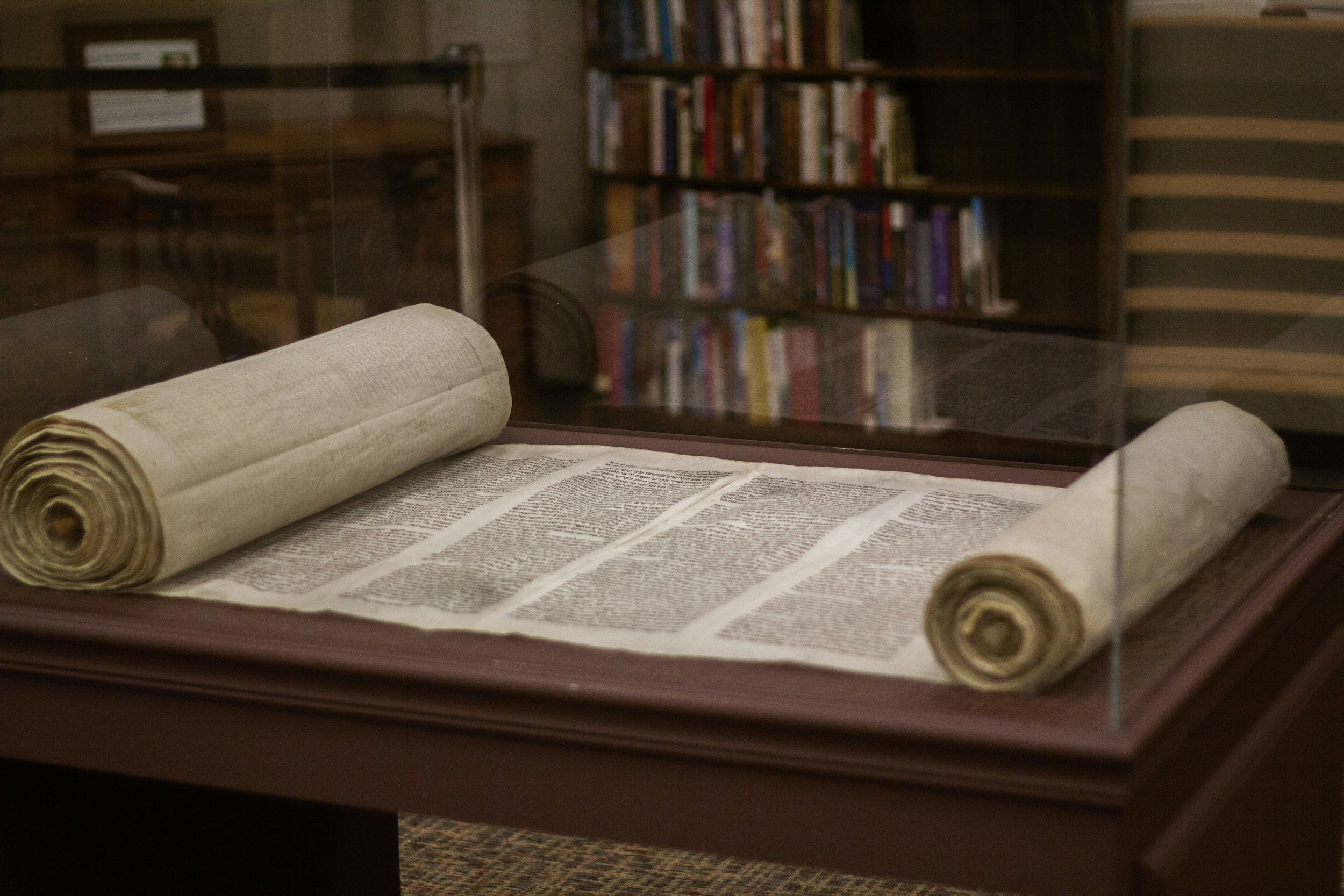
The English title Deuteronomy, referring to the fifth book of Moses, comes from the words deuteros (“second”) and nomos (“law”) as found in the Greek translation of Deuteronomy 18:17. Although this title literally means “second law,” the content of the book was not a new law given to the same generation of Israelites, but rather the same law reissued to a new generation of Israelites. Having traveled for forty years through the wilderness, it was the younger generation that survived nationwide apostasy and was set to enter the Promised Land (cf. Num. 14:26-35). Thus, to prepare them for life as the people of God in a settled land, Moses reminded them of their redemptive past, renewed the Mosaic Covenant with them, applied God’s Law to particular situations they would face, and charged them to obey so as to enjoy God’s blessings rather than suffer His curses.
Standing in the land of Moab near the Jordan River, Moses began his renewal by narrating the events that had led up to that pivotal moment. This was a call for the people to remember their past—not strictly for the purpose of an introspective self-assessment, but so that they would recognize who had brought them to this time and place. It was Yahweh who spoke to the nation at Mount Sinai (cf. Deut. 1:6), who promised to give them the land of Canaan (cf. Deut. 1:8), who multiplied them (cf. Deut. 1:10-11), and who would defeat the nations for them (cf. Deut. 1:29-30-31). Despite this, the former generation had cowered in fear and disbelief when preparing to enter (cf. Deut. 1:32-33, Heb. 3:7-11). They possessed God’s promises and witnessed God’s power, but had an unbelieving heart all the same. This failure served as an important warning to the younger Israelites, just as it was for Israelites centuries later: “Take care, brethren, that there not be in any one of you an evil, unbelieving heart that falls away from the living God” (Heb. 3:12).
After spending decades in the wilderness, God thenhad led the nation through the lands of Edom, Moab, and Ammon (cf. Deut. 2:2-23), giving them great victories near the city of Heshbon and in the land of Bashan (cf. Deut. 2:24-3:11). These early military successes were not just necessary events en route to their final destination, but were intended to serve as anchors of faith for the Israelites. When traveling through Moab and Ammon, Moses noted that there were large people whom the Moabites called Emim (“scary giants”), whom the Israelites called Anakim (“tall giants”), known also as Rephaim (“legendary giants”) by various nations, as well as Zamzummin (“fearsome giants”) by the Ammonites (cf. Deut. 2:10, 20). When capturing the cities near Heshbon and in the land of Bashan, Moses noted that “there was no city that was too high for us” (Deut. 2:36) and that “all these were cities fortified with high walls, gates and bars” (Deut. 3:5). These comments about the stature of the inhabitants and structure of the cities were subtle rebukes to the earlier generation of Israelites who feared entering the land of Canaan because “the people are bigger and taller than we; the cities are large and fortified to heaven” (Deut. 1:28). In other words, there was no reason to fear tall men nor tall cities west of the Jordan River because of what God had already done to tall men and tall cities east of the Jordan River (cf. Deut. 2:21, Josh. 6:1-5). God’s protection and power could be trusted in the future based on His protection and power in the past. That kind of faith logic is the same for Christians today: “What then shall we say to these things? If God is for us, who is against us? He who did not spare His own Son, but delivered Him over for us all, how will He not also with Him freely give us all things?” (Rom. 8:31-32).
Continuing his recollection of the past, Moses explained that when entering the Transjordan region, the tribes of Reuben, Gad, and half of Manasseh decided to settle there rather than in the land of Canaan. Moses had consented, requiring only that the men of the tribes cross over and help the rest of the nation conquer the land before returning (cf. Deut. 3:18-20). Unfortunately, Moses himself would not be crossing over due to his sin in the wilderness (cf. Deut. 3:26, Num. 20:12). But the nation would not be without a leader: Joshua was selected to bring the nation into their inheritance (cf. Deut. 3:21-22, 28). In all of this, God’s provisions and plans were shown to be steadfast. Men may change their minds, men may let their emotions get the best of them, but God does not (cf. Prov. 19:21, Isa. 14:24, Mal. 3:6). He is the immutable and impassible Creator upon whom we, too, can bank all of our hopes (cf. Psa. 62:1-2).
Rounding out his introduction, Moses insisted that Israel remember the unchanging commands God had given them (cf. Deut. 4:9) as well as the enduring covenant He had established for them (cf. Deut. 4:23). Exalting the sufficiency of God’s Word, Moses said, “You shall not add to the word which I am commanding you, nor take away from it, that you may keep the commandments of the Lord your God which I command you” (Deut. 4:2). Centuries later, Solomon would use similarly phrasing to exalt the glory of God’s unchanging sovereignty: “I know that everything God does will remain forever; there is nothing to add to it and there is nothing to take from it, for God has so worked that men should fear Him” (Ecc. 3:14). Israel needed these kinds of vital reminders, as do we. To those today who would assault the sufficiency of Scripture (with appeals to extrabiblical revelation, pragmatic church methodology, or allegedly “sacred” tradition), and to those who assault the sovereignty of God (with appeals to human free will, synergistic schemes of salvation, or universal views of the atonement), Christians would do well to stand valiantly with Moses and declare that God’s eternal purposes are just as unchanging as His eternal precepts. We have a sufficient Word and a sovereign God!
Moses then laid the foundation for his parting instructions first and foremost with a reiteration of the Ten Commandments (cf. Deut. 5:1ff). Though the commandments themselves remained unchanged from their first issuing at Mount Sinai, they were expanded to accommodate the situations Israel would face in Canaan. For example, the reissued tenth commandment included an additional prohibition against coveting a neighbor’s “field” (Deut. 5:21), since the people were about to own parcels of land.
But it wouldn’t be enough for that generation alone to know God’s Word; it was vital that they faithfully transmit it to successive generations. For that reason, Moses stressed, “These words, which I am commanding you today, shall be on your heart. You shall teach them diligently to your sons and shall talk of them when you sit in your house and when you walk by the way and when you lie down and when you rise up” (Deut. 6:6-7). The literary merisms Moses used (“when you sit … when you walk” and “when you lie down … when you rise up”) meant that godly discipleship was to be in all places and at all times. Just as pagan education would find no place in God’s Word for believers back then, neither does secular education today. On the contrary, education according to biblical principles requires instruction that intentionally exalts the Great Teacher (cf. John 13:13, Prov. 1:7), in whom are all the riches of wisdom and knowledge (cf. Col. 2:3).
And what was the most fundamental teaching for the covenant community? The Shema—the preeminent confession of worship of the one true God: “Hear, O Israel! The Lord is our God, the Lord is one!” (Deut. 6:4). This statement affirmed that Yahweh is not only the God of Israel, but the only true God of all. Against the plurality of false gods in the land of Canaan, Yahweh is “one.” Israel needed to remember their unique God in order to remain as a unique people in the Promised Land (cf. Deut. 7:1-5).
By using the Hebrew word echad (which can denote a united oneness, cf. Gen. 2:24) rather than yachid (which stresses a solitary oneness) the Shema not only upheld monotheism for Israel, but paved the way for the later revelation of trinitarian monotheism. It comes as no surprise, then, that the Apostle Paul utilized the Shema when explaining, “Yet for us there is but one God, the Father, from whom are all things and we exist for Him; and one Lord, Jesus Christ, by whom are all things, and we exist through Him” (1 Cor. 8:6). Like Moses, Paul taught that “the Lord is our God,” but by calling Jesus “Lord” and the Father “God,” Paul emphasized the truth that the one divine being is more than one Person. In contrast with idols of Paul’s day (cf. 1 Cor. 8:5), as well as idolatrous notions of God in our day that deny the deity of the Son, the truth is that Jesus is Yahweh (cf. John 8:58). Furthermore, because “the Spirit is Lord” (2 Cor. 3:17), the Spirit is also Yahweh. That is not to say there are three “Yahwehs,” but one—the Father, Son, and Spirit in perfect triunity (cf. John 10:30, Matt. 28:19). And Jesus made it clear that affirming this is non-negotiable for salvation: “Therefore I said to you that you will die in your sins; for unless you believe that I am He, you will die in your sins” (John 8:24).
An additional landmark statement followed right on the heels of the Shema: “You shall love the Lord your God with all your heart and with all your soul and with all your might” (Deut. 6:5). Combining that with the command to “love your neighbor as yourself” (Lev. 19:18), Jesus summarized the entirety of Mosaic Law (cf. Matt. 22:37-40). These commands also serve as reminders that love is neither a sappy, sentimental impulse of emotion, nor a phenomenon that people “fall into.” Rather, biblically speaking, love is a determination of the heart that manifests itself in deed and truth (cf. 1 John 3:16-18). Of course, no one but Jesus has ever perfectly loved God and others. Thankfully, the righteousness earned by Christ in His law-keeping life is credited to those who believe in Him.
Although “love God and love others” was a good summary of the Ten Commandments, Moses didn’t leave it at that. Instead, he went on to expound the Decalogue with specific statutes and penalties so that the nation would be governed rightly in the Promised Land. Thus, working through each of the commandments with specific application served as the bulk of his remaining address in the plains of Moab. Far from being an assortment of randomly cited laws, Moses’ words navigated sequentially and systematically through the Ten Commandments, showing the Israelites how to interpret and apply them.
Beginning with the first commandment (“You shall have no other gods before Me”), Moses taught the people to “utterly destroy all the places where the nations whom you shall dispossess serve their gods” (Deut. 12:2) as well as “seek the Lord at the place which the Lord your God shall choose” (Deut. 12:5). The Israelites were prohibited from worshiping Yahweh wherever they wanted, and instead were required to give sacrifices, tithes, and other offerings strictly at one location. “Be careful that you do not offer your burnt offerings in every cultic place you see, but in the place which the Lord chooses in one of your tribes, there you shall offer your burnt offerings, and there you shall do all that I command you” (Deut. 12:13-14). One place for the one, true God. No other place, and no other gods.
Applying the second commandment (“You shall not make for yourself an idol”), Moses issued the strictest of penalties to those who would entice the nation to idolatry. False prophets who said, “Let us go after other gods” (Deut. 13:2)—even if accompanied by a sign or wonder—were to be put to death (cf. Deut. 13:5). Fellow Israelites who said, “Let us go and serve other gods” (Deut. 13:6)—even if they were close family members or friends—were to be stoned to death (cf. Deut. 13:10). And when entire cities were seduced into thinking, “Let us go and serve other gods” (Deut. 13:13), the inhabitants were to be struck with the sword, their personal property was to be burned, and the entire city was to be put to ruins (cf. Deut. 13:15-16). Capital punishment for idolaters was so that “all Israel will hear and be afraid, and will never again do such a wicked thing among you” (Deut. 13:11). Whether it’s an illegitimate desire (loving that which is inherently evil) or an inordinate desire (loving anything more than loving God), God takes idolatry seriously, and so should we.
At the same time, the fact that worshiping wood and stone objects posed such an ongoing temptation to the Israelites was a peculiar tragedy. Sure, they may have never seen their God, but they knew Him and His mighty works, and that should have been enough to trust Him over pagan deities. Specifically, because “God is spirit” (John 4:24) and “heaven and the highest heaven cannot contain [Him]” (1 Kin. 8:27), He is not a physical being subject to spatial limitations. Unlike the false gods of Canaan, Yahweh is not bound to an area, shrine, or temple, but is able to “fill the heavens and the earth” (Jer. 23:24). This ubiquitous omnipresence means that He is wholly present everywhere, not divided into pieces or parts across the world (cf. Psa. 139:7). Wherever they were, so was God—in His fullness. What an immense blessing! Shoddy, manmade carvings are laughable compared to Yahweh (cf. Isa. 46:5-7). A more contemplative knowledge of God would have been a powerful defense against idolatry for the Israelites long ago. May it be so for Christians today. “Little children, guard yourselves from idols” (1 John 5:21).
The third commandment (“You shall not take the name of the Lord your God in vain”) was applied to the way in which Israel represented Yahweh. As “sons of the Lord your God” (Deut. 14:1), the Israelites represented His name to a watching world. Thus, they were called to be a unique people. Distinction from the world in appearance and diet—as well as in their lives—showed the world a distinction between Yahweh and false gods: “You are a holy people to the Lord your God” (Deut. 14:2, 21). Furthermore, since God chose to establish His name at the tabernacle, a disregard of the tabernacle was a disregard of God’s name as well (cf. Deut. 14:23-24). In all of these things, God would be mocked and denigrated—blasphemed—by other nations if His people dishonored Him with their lives (cf. Rom. 2:17-24). Though the Church is not Israel, nor under Mosaic Law as that nation was, believers today are commanded to represent God with distinct lives as well: “Like the Holy One who called you, be holy yourselves also in all your behavior; because it is written, ‘You shall be holy, for I am holy’” (1 Pet. 1:14-15). To embrace the label “Christian,” while living nothing like Christ, is to take God’s name in vain. Functionally speaking, false converts are blasphemers.
The fourth commandment (“Remember the Sabbath”) was expressed in two ways: freedom and feasts. First, the Israelites were instructed to release all debts from one another every seven years (cf. Deut. 15:1), liberate slaves every seven years (cf. Deut. 15:12), and set aside firstborn animals for worship rather than labor (cf. Deut. 15:19). In each of these cases, the God who gives rest to His people commanded them to provide rest for one another. Second, the Israelites were instructed to observe the annual feasts, such as Passover and the Feast of Weeks. These events commemorated the rest from Egyptian oppression that God had given them, and were themselves a day of worship rather than labor. As with the Sabbath day, the purpose of these laws was to point the nation to true spiritual rest in the coming Savior, who is Lord of the Sabbath (cf. Matt. 12:8). Since Christ has indeed come, those in the Church are not to judge one another over observance or non-observance of a particular day. In light of that, Christians today gather for worship on Sunday morning not to observe a supposed “Christian Sabbath,” but to remember our Lord’s resurrection.
Application of the fifth commandment (“Honor your father and your mother”) took the form of appointing civil authorities in the land. Whether showing respect for judges and officers who carried out impartial justice (cf. 16:18-20), or showing respect for prophets, priests, and kings who provided moral and spiritual direction to the nation (cf. Deut. 17:19, 18:5, 18:22), the home was the place of preparation and practice. Thus, honoring parents was the societal basis for honoring all authorities, which was ultimately honoring to God, as it is today: “Submit yourselves for the Lord’s sake to every human institution … honor all people, love the brotherhood, fear God, honor the king” (cf. 1 Pet. 2:13a, 17). That’s not to say that every authority was godly, however. On the contrary, Moses included another test by which to evaluate the claims of a prophet: “When a prophet speaks in the name of the Lord, if the thing does not come about or come true, that is the thing which the Lord has not spoken. The prophet has spoken it presumptuously; you shall not be afraid of him” (Deut. 18:22). The first indication of a false prophet was that he worshiped a false god (cf. Deut. 13:1-5), and the second indication was that he made a false prediction. These tests would be vital not only to help the Israelites watch out for false prophets, but also to help them look out for the coming true prophet promised by Moses: “The Lord your God will raise up for you a prophet like me from among you, from your countrymen, you shall listen to him” (Deut. 18:15).
Jesus was the fulfillment of that prophecy, being proclaimed by the apostles as the very prophet sent by God whom the nation, unfortunately, did not listen to. Preaching at the temple, the Apostle Peter said, “Therefore repent and return, so that your sins may be wiped away, in order that times of refreshing may come from the presence of the Lord; and that He may send Jesus the Christ appointed for you, whom heaven must receive until the period of restoration of all things about which God spoke by the mouth of His holy prophets from ancient time. Moses said, ‘The Lord God will raise up for you a prophet like me from your brethren; to Him you shall give heed to everything He says to you’” (Acts 3:19-22). Although the “times of refreshing” have not arrived, there will indeed be a day when the nation of Israel does heed the words of Christ, at which point the Kingdom of God will arrive for a thousand-year “period of restoration” (cf. Jer. 16:15, Amos 9:14-15, Ezek. 39:25-26, Acts 1:6).
Necessary laws for upholding the sixth commandment (“You shall not murder”) began with regulations related cities of refuge, which were designated locations for adjudicating murder trials (cf. Deut 19:1-3). Next, Moses issued a command related to moving the boundary markers of a neighbor’s land (cf. Deut 19:14). Since Israel was an agrarian society in which they depended on farming for their own sustenance, to move a boundary was more than just theft; it was culpable starvation, in which indirect harm could be caused by depriving a man of his means of survival. These instructions were followed with laws related to punishment of a malicious witness (cf. Deut. 19:16). Should a false witness accuse another man of a crime and be caught, the false witness would suffer the punishment that would have been enacted upon the accused man—up to, and including, “life for life” (Deut. 19:21). Additional commands derived from the sixth commandment related to warfare. Soldiers with personal matters to attend to were allowed a form of military furlough, lest they suffer an untimely death (cf. Deut. 20:5-7). Enemy combatants were given the option of being forced laborers rather than casualties (cf. Deut. 20:10-12). Even natural life, like fruit trees, had to be spared during sieges (cf. Deut. 20:19-20). Finally, the sanctity of life was upheld in issues related to unsolved murder cases (cf. Deut. 21:8-9), women captives (cf. Deut. 21:10-14), order in the home for men who remarried after the death of their first wife (cf. Deut. 21:15), rebellious sons who were a threat to society (cf. Deut. 21:20-21), and caring for the well-being of animals (cf. Deut. 22:6). Compared to the various death cults of pagan inhabitants in the land, Israel was to be known for serving Yahweh, the God of life (cf. 1 Tim. 6:13).
The stress of the seventh commandment (“You shall not commit adultery”) found expression in laws related to purity in both relationships and worship. Sexual sins discovered before marriage (cf. Deut. 22:28-29), immediately after the wedding (cf. Deut. 22:20-21), or later in marriage (cf. Deut. 29:22-24) were dealt with accordingly. Laws were also issued against those who dared to mimic pagan fertility practices in corporate worship (cf. Deut. 23:1), partner with Moabites who had tempted the Israelites into sexual sin (cf. Deut. 23:4, Num. 25:1-3), or defile the Israelite army with bodily functions (cf. Deut. 23:10). As a reminder that God’s people were to be pure, Moses also commanded them not to sow two kinds of seed in the same field, plow with two different kinds animals, or wear garments of different fabrics (cf. Deut. 22:9-11). Using the prohibition against plowing with two kinds of animals as an analogy for Christian relationships, the Apostle Paul instructed Christians in Corinth not to yoke themselves unequally with unbelievers: “Do not be bound together with unbelievers; for what partnership have righteousness and lawlessness, or what fellowship has light with darkness?” (2 Cor. 6:14). Paul’s admonition certainly applies to more than marriage—but not less. Christian relationships in all spiritual endeavors are to be pure.
With the eighth commandment (“You shall not steal”), Moses turned his attention to the economic condition of the community as a whole as well as of the most vulnerable among them. Caring for non-Israelite slaves fleeing from wicked Canaanite masters (cf. Deut. 23:15-16), providing interest-free loans to fellow citizens (cf. Deut. 23:19), and maintaining promised financial support of the tabernacle (cf. Deut. 23:21) were among the ways in which the good of society as a whole was upheld. Preventing women from being treated as commodities (cf. Deut. 24:1-4), prohibiting the taking of life-sustaining collateral from the desperate (cf. Deut. 24:6), and paying day laborers immediately (cf. Deut. 24:14-15) were ways in which the good of society’s most vulnerable was upheld. Notably, love for others was evident with the ways in which crops were financially managed: an Israelite walking through his neighbor’s crop was free to eat of it so long as he didn’t take advantage of the generosity by harvesting more than needed for his own sustenance (cf. Deut. 23:25). Conversely, an Israelite harvesting his own field was free to use it for profit so long as he didn’t neglect generosity by harvesting it to the fullest extent, in disregard of the sustenance of others (cf. Deut. 24:19-22). The Church today follows similar principles by affirming both the right to personal wealth as well as the responsibility for personal generosity: “Instruct those who are rich in this present world not to be conceited or to fix their hope on the uncertainty of riches, but on God, who richly supplies us with all things to enjoy. Instruct them to do good, to be rich in good works, to be generous and ready to share” (1 Tim. 6:17-18). It’s to a local church’s shame when its financial abundance is not used first and foremost to alleviate the difficulties faced by the pastors and poor among them (cf. 1 Tim. 5:3, Acts 2:43-47, 2 Cor. 8:1-9:15).
Moses’ application of the ninth commandment (“You shall not bear false witness”) encompassed several forms of misrepresenting the truth. Treating a man as worse than animals by beating him with more than forty stripes (cf. Deut. 25:1-4), changing one’s mind about fulfilling the duties of a Levirate marriage, and implementing deceitful business practices with unequal weights and measures all derived their prohibition from these covenant laws regarding the truth. In fact, it was God Himself who served as the basis of upholding the truth when He vowed to destroy the Amalekites for their warfare against Israel—and He intended to keep that vow (cf. Deut. 25:17-19, Exod. 17:8-16). Consequently, the Israelites were expected to be a people of the truth. Christians today are similarly instructed to “not lie to one another, since you laid aside the old self with its evil practices, and have put on the new self who is being renewed to a true knowledge according to the image of the One who created him” (Col. 3:9-10).
The tenth and final commandment of the Decalogue (“You shall not covet”) was used to direct the nation’s eyes to the coming blessings in the Promised Land (cf. Deut. 26:1). Rather than stockpiling their abundance, Moses called the people to a life of shared celebration in corporate worship. The Israelites were to bring their firstfruits to the tabernacle, recite the narrative of the exodus from Egypt, and then contribute their crops for others to enjoy (cf. Deut. 26:2-11). “You and the Levite and the alien who is among you shall rejoice in all the good which the Lord your God has given you and your household” (Deut. 26:11). Additionally, Moses reminded the people of the third (of three) tithes they were required to pay (cf. Deut. 26:12). Whereas the first tithe (ma’aser rishon) was given every year for the workers at the tabernacle (cf. Lev. 27:30, Num. 18:21), and the second tithe (ma’aser sheni) was given every year for the festivals (cf. Deut. 12:10-11, 17-18), this third tithe (ma’aser ani) was given every three years to support the poor and needy among them (cf. Deut. 14:28-29). The third tithe, given triennially, was a reminder that God’s blessings were to be paid forward, not kept hoarded. Taken together, then, these three tithes—for the “priest,” the “feast,” and the “least”—represented a tax of roughly 23.3% of an Israelite’s yearly income. Although the tithe was obligatory, it should have been a joy for them to comply, knowing that it was vital for the nation’s survival in covenant with God: “Look down from Your holy habitation, from heaven, and bless Your people Israel, and the ground which You have given us, a land flowing with milk and honey, as You swore to our fathers” (Deut. 26:15). Since Christians today are not under the Mosaic Covenant, they have no requirement to “tithe” in their local church. Instead, they are to pay taxes to whichever secular government they find themselves living under (cf. Rom. 13:6-7), and give to their local church without compulsion (cf. 2 Cor. 9:7). Those who impose a set standard of giving upon believers, whether with a required percentage or merely a “suggested amount,” violate the principles of New Covenant giving and rob the Christian of the ability to do “just as he has purposed in his heart” as a “cheerful giver.” We give for our brother’s need (cf. 1 John 3:17), not a leader’s greed (cf. Titus 1:11).
Having given a comprehensive exposition of the Ten Commandments, Moses ended the covenant renewal with another call for obedience: “Be silent and listen, O Israel! This day you have become a people for the Lord your God. You shall therefore obey the Lord your God, and do His commandments and His statutes which I command you today” (Deut. 27:10). In response, the nation vowed obedience, calling divine judgment upon themselves if they turned away (cf. Deut. 27:14-26). To make the point clear, Moses explained the numerous blessings they would receive in the Promised Land if they obeyed (cf. Deut. 28:1-14), followed by an even greater number of curses they would suffer if they disobeyed (cf. Deut. 28:15-68). If they heeded God’s Word, they would become an object lesson to the nations that Yahweh was a source of immense blessing. But if they rejected His Word, they would become an object lesson to the nations that Yahweh is a source of immense wrath. One way or another, they would be an object lesson. And so it is with all mankind. The Potter has right over the clay, shaping every man to display His attributes in whatever way He sees fit. Vessels of mercy—the elect who are chosen by God for salvation before the foundation of the world—demonstrate the glorious grace of God’s love. On the other hand, vessels of wrath—the reprobate who are not chosen—demonstrate the unparalleled terror of God’s wrath. In all of this, no creature can ward off His hand, nor does anyone have the right to say, “What have you done?” (Dan. 4:35, cf. Rom. 9:20).
Of course, the obvious reality is that none of the Israelites would be able to keep the Law of God personally, perfectly, and perpetually. And for that, they would suffer. Moses said, “Cursed is he who does not confirm the words of this law by doing them” (Deut. 27:26). As redemptive history would have it, the covenant curses of God’s Law did come upon on the nation—and in horrific ways.
For becoming hostile to God, Moses warned that God would “let loose among you the beasts of the field, which shall bereave you of your children” (Lev. 26:22). When the nation rejected the divine words of the prophets, even influencing their kids to follow suit, that judgment did come to pass: “Then [Elisha] went up from there to Bethel; and as he was going up by the way, young lads came out from the city and mocked him and said to him, ‘Go up, you baldhead; go up, you baldhead!’ When he looked behind him and saw them, he cursed them in the name of the Lord. Then two female bears came out of the woods and tore up forty-two lads of their number” (2 Kin. 2:23-24, cf. 2 Kin. 17:25).
For not serving God, Moses warned that an enemy nation would be sent to “besiege you in all your towns … then you shall eat the offspring of your own body, the flesh of your sons and of your daughters whom the Lord your God has given you, during the siege and the distress by which your enemy shall oppress you” (Deut. 28:52-53). When Samaria, the capital of the northern kingdom, was besieged by the Arameans, that judgment did take place: “As the king of Israel was passing by on the wall a woman cried out to him, saying, ‘Help, my lord, O king!’” … “And the king said to her, ‘What is the matter with you?’ And she answer, ‘This woman said to me, ‘Give your son that we may eat him today, and we will eat my son tomorrow.’ So we boiled my son and ate him; and I said to her on the next day, ‘Give your son, that we may eat him’; but she has hidden her son.’ It came about when the king heard the words of the woman that he tore his clothes” (2 Kin. 6:26-30).
Ultimately, for not obeying God, Moses warned that the nation would be scattered “among all peoples, from one end of the earth to the other end of the earth” (Deut. 28:64). After centuries of disobedience, the northern kingdom of Samaria, followed by the southern kingdom of Judah, were indeed exiled to foreign nations (cf. 2 Kin. 17:6, 24:14ff). To this day, and throughout the remainder of the Church Age, the Jewish people remain largely exiled and unsettled, as Jesus Himself said would be the case: “And they will fall by the edge of the sword, and will be led captive into all nations; and Jerusalem will be trampled under foot by the Gentiles until the times of the Gentiles are fulfilled” (Luke 21:24). After the conclusion of this present dispensation at the rapture of the Church, the tribulation events will lead the nation of Israel to repentance, at which point they will be permanently restored to the land under the rule of King Jesus (cf. Isa. 49:5-22).
Insisting on the certainty of these judgments (just prior to his death and transfer of leadership to Joshua), Moses said, “For I know that after my death you will act corruptly and turn from the way which I have commanded you; and evil will befall you in the latter days, for you will do that which is evil in the sight of the Lord, provoking Him to anger with the work of your hands” (Deut. 31:29). Thinking through that foreboding prophecy, the inevitable question in the minds of the Israelites would have been, “When will this take place?” Preempting that curiosity, Moses stated, “The secret things belong to the Lord our God, but the things revealed belong to us and to our sons forever, that we may observe all the words of this law” (Deut. 29:29). In other words, rather than worrying about the timing of their apostasy in the future (a “secret thing” known only to God), the Israelites’ greater concern should have been to follow the Lord wholeheartedly in the present (via the “things revealed” in Mosaic Law).
In similar fashion, when the disciples asked Jesus about the timing of His second coming to establish the Kingdom, He replied, “It is not for you to know times or epochs which the Father has fixed by His own authority; but you will receive power when the Holy Spirit has come upon you; and you shall be My witnesses both in Jerusalem, and in all Judea and Samaria, and even to the remotest part of the earth” (Acts 1:7-8). Rather than speculating about the timing of Christ’s return, believers today ought to focus on helping the world prepare for Christ’s return—through repentance and faith.
Lest Gentiles might read the Mosaic Law given to Israel and think they would fare any better at earning salvation, either entirely or in part, through good works, the same impossible standard was quoted by the Apostle Paul: “For as many as are of the works of the Law are under a curse; for it is written; ‘Cursed is everyone who does not abide by all things written in the book of the law, to perform them’” (Gal. 3:10). Those who want to earn immortality only need to do one thing: be perfect (cf. Matt. 5:48, Rom. 2:6-7, Jas. 2:10). But since all have sinned and fall short of the glory of God, both Jews and Gentiles desperately need a substitute. And in Christ—the mediator who is truly God and truly man—we find such a substitute. When Christ died on the cross, He bore the curse required for our disobedience (cf. Deut. 21:23) so that through faith in Him we can receive the blessings merited by His obedience (cf. 2 Cor. 5:21).
It’s for that reason that the Law of Moses was never intended to be a means of justification. But that’s not to say that Mosaic Law was inherently bad. On the contrary, the Law is good—if one uses it lawfully (cf. 1 Tim. 1:8). So what purpose does Mosaic Law serve for believers in this present age? First, the Law of Moses has a “civil use” for restraining sin. By its very existence, it provokes the conscience of sinners (cf. Rom. 7:7). Second, the Law of Moses has a “pedagogical use” in teaching man about his moral inability. By exposing our failure to meet God’s perfect standard, like a mirror, it leads us to seek salvation through faith in Christ (cf. Gal. 3:24). Third, the Law of Moses has “normative use” for Christians. By embodying the commands to “love God” and “love others,” it provides examples and principles for that can be applied for godly living today.
However you use this book of the “second law” to teach others, be sure to remind them that to receive salvation’s blessings they don’t need a second chance; they need a second Adam (cf. 1 Cor. 15:45). The following outline is offered to help.
Remember the Promise and Patience of God (Deuteronomy 1:1-46)
Introduction to the Message (Deut. 1:1-5)
Instructions for Travel (Deut. 1:6-8)
Inadequacy of Moses (Deut. 1:9-18)
Investigation of the Land (Deut. 1:19-25)
Ingratitude of the Nation (Deut. 1:26-33)
Impact of Unbelief (Deut. 1:34-46)
Remember the Protection and Power of God (Deuteronomy 2:1-3:11)
Arrival from the Wilderness (Deut. 2:1)
Approach through the Land of Edom (Deut. 2:2-8)
Approach through the Land of Moab (Deut. 2:9-15)
Approach next to the Land of Ammon (Deut. 2:16-23)
Attack near the City of Heshbon (Deut. 2:24-37)
Attack in the Land of Bashan (Deut. 3:1-11)
Remember the Provision and Plan of God (Deuteronomy 3:12-29)
Consent for the Tribes’ Land (Deut. 3:12-17)
Conditions for the Tribes’ Land (Deut. 3:18-20)
Courage for Joshua’s Warfare (Deut. 3:21-22)
Conclusion of Moses’ Leadership (Deut. 3:23-29)
Remember the Precepts and Purposes of God (Deuteronomy 4:1-43)
The Demand for Israel’s Obedience (Deut. 4:1-9)
The Description of Israel’s Past (Deut. 4:10-14)
The Directive for Israel’s Present (Deut. 4:15-24)
The Danger in Israel’s Future (Deut. 4:25-31)
The Distinction of Israel’s God (Deut. 4:32-40)
The Designation for Israel’s Cities (Deut. 4:41-43)
Mosaic Law Foundation: The Ten Commandments (Deuteronomy 4:44-5:33)
Context of Redemption (Deut. 4:44-5:5)
Commandment One (Deut. 5:6-7)
Commandment Two (Deut. 5:8-10)
Commandment Three (Deut. 5:11)
Commandment Four (Deut. 5:12-15)
Commandment Five (Deut. 5:16)
Commandment Six (Deut. 5:17)
Commandment Seven (Deut. 5:18)
Commandment Eight (Deut. 5:19)
Commandment Nine (Deut. 5:20)
Commandment Ten (Deut. 5:21)
Concern from the People (Deut. 5:22-27)
Counsel for Life in the Land (Deut. 5:28-33)
Mosaic Law Foundation: Israel’s Unique God (Deuteronomy 6:1-25)
Dedication to the Commandments (Deut. 6:1-3)
Devotion to the One True God (Deut. 6:4-9)
Denial of Every False God (Deut. 6:10-19)
Discipleship of the Next Generation (Deut. 6:20-25)
Mosaic Law Foundation: Israel’s Unique Identity (Deuteronomy 7:1-26)
Break with Paganism (Deut. 7:1-5)
Basis of Obedience (Deut. 7:6-11)
Blessings upon Israel (Deut. 7:12-16)
Bravery with God (Deut. 7:17-24)
Ban on Idolatry (Deut. 7:25-26)
The Danger of Haughtiness in the Future (Deuteronomy 8:1-9:5)
Remember Humbling Discipline from God (Deut. 8:1-10)
Resist Haughtiness with Wealth (Deut. 8:11-20)
Resist Haughtiness in War (Deut. 9:1-5)
The Disaster of Haughtiness in the Past (Deuteronomy 9:6-10:11)
Remember Haughtiness at Sinai (Deut. 9:6-21)
Remember Haughtiness in the Wilderness (Deut. 9:22-29)
Remember Humbling Mercy from God (Deut. 10:1-11)
The Duties for Humility in the Present (Deuteronomy 10:12-11:32)
Requirement to Fear, Follow, Love, Serve, and Obey God (Deut. 10:12-13)
Reason to Fear, Follow, Love, Serve, and Obey God (Deut. 10:14-19)
Requirement to Fear God (Deut. 10:20)
Reason to Fear God (Deut. 10:21-22)
Requirement to Love God (Deut. 11:1)
Reason to Love God (Deut. 11:2-7)
Requirement to Obey God (Deut. 11:8-9)
Reason to Obey God (Deut. 11:10-12)
Requirement to Serve God (Deut. 11:13-17)
Reason to Serve God (Deut. 11:18-21)
Requirement to Follow God (Deut. 11:22)
Reason to Follow God (Deut. 11:23-25)
Result of Fearing, Following, Loving, Serving, and Obeying God (Deut. 11:26-32)
You Shall Have No Other Gods Before Me (Deuteronomy 12:1-32)
Consuming Sacrifices in Only One Place (Deut. 12:1-14)
Consuming Non-Sacrifices in any Place in the Land (Deut. 12:15-19)
Consuming Non-Sacrifices in any Place in the Expanded Land (Deut. 12:20-28)
Condemning Sacrifices of Pagans (Deut. 12:29-32)
You Shall Not Make for Yourself an Idol (Deuteronomy 13:1-18)
Sentencing False Prophets Who Teach (Deut. 13:1-5)
Stoning Family Members Who Entice (Deut. 13:6-11)
Striking Faithless Cities That Conspire (Deut. 13:12-18)
You Shall Not Take the Name of the Lord Your God in Vain (Deuteronomy 14:1-29)
Representing God’s Name in Appearance (Deut. 14:1-2)
Remembering God’s Name with Food (Deut. 14:3-21a)
Revering God’s Name at the Tabernacle (Deut. 14:21b-29)
Remember the Sabbath (Freedom) (Deuteronomy 15:1-23)
Rest for Debtors Every Seventh Year (Deut. 15:1-11)
Rest for Slaves Every Seventh Year (Deut. 15:12-18)
Rest for Firstborn Male Animals Every Year (Deut. 15:19-23)
Remember the Sabbath (Feasts) (Deuteronomy 16:1-17)
Rest in Passover and Unleavened Bread Every Year (Deut. 16:1-8)
Rest in the Feast of Weeks Every Year (Deut. 16:9-12)
Rest in the Feast of Booths Every Year (Deut. 16:13-15)
Requirement for Male Attendance Three Times Every Year (Deut. 16:16-17)
Honor Your Father and Your Mother (Judges and Officers) (Deuteronomy 16:18-17:13)
Impartial Selection of Authorities (Deut. 16:18-20)
Impartial Sentencing of Idolaters (Deut. 16:21-17:7)
Impartial Submission to Due Process (Deut. 17:8-13)
Honor Your Father and Your Mother (Prophets, Priests, and Kings) (Deuteronomy 17:14-18:22)
Selecting Righteous Kings (Deut. 17:14-20)
Supporting Priests and Levites (Deut. 18:1-8)
Staying Away from Pagan Prophets (Deut. 18:9-14)
Seeking the Promised Prophet (Deut. 18:15-19)
Scrutinizing False Prophets (Deut. 18:20-22)
You Shall Not Murder (Justice) (Deuteronomy 19:1-21)
Arrangements of Cities of Refuge (Deut. 19:1-7)
Accommodation of Future Cities of Refuge (Deut. 19:8-10)
Accountability for Criminal Evasion (Deut. 19:11-13)
Accountability for Culpable Starvation (Deut. 19:14)
Accountability for Corrupt Testimony (Deut. 19:15-21)
You Shall Not Murder (Warfare) (Deuteronomy 20:1-20)
Sparing Untimely Death of Soldiers (Deut. 20:1-9)
Settling Terms of Peace with Submissive Nations (Deut. 20:10-18)
Safeguarding Natural Life during Sieges (Deut. 20:19-20)
You Shall Not Murder (Sanctity of Life) (Deuteronomy 21:1-22:8)
Preserving Justice for Life in Unsolved Murder (Deut. 21:1-9)
Providing a Way of Life for Women Captives (Deut. 21:10-14)
Preserving Order for Life in the Home (Deut. 21:15-21)
Promoting a Culture of Life in Society (Deut. 21:22-22:8)
You Shall Not Commit Adultery (Pure Relationships) (Deuteronomy 22:9-30)
Illustrations of Purity (Deut. 22:9-12)
Immorality Alleged after Wedding (Deut. 22:13-21)
Infidelity in Marriage or Engagement (Deut. 22:22-24)
Innocence Violated by Rape (Deut. 22:25-27)
Impurity Requiring Marriage (Deut. 22:28-29)
Incest Including Stepfamily (Deut. 22:30)
You Shall Not Steal (Preserving the Community) (Deuteronomy 23:15-25)
Complicit Mistreatment of Slaves (Deut. 23:15-16)
Corrupt Earnings from Immorality (Deut. 23:17-18)
Cutthroat Lending Practices to Citizens (Deut. 23:19-20)
Careless Financial Vows to God (Deut. 23:21-23)
Capitalistic Misuse of Property (Deut. 23:24-25)
You Shall Not Steal (Protecting the Vulnerable) (Deuteronomy 24:1-22)
Callous Devaluing of Women (Deut. 24:1-5)
Cutthroat Collateral from the Desperate (Deut. 24:6)
Coercive Enslavement of Citizens (Deut. 24:7)
Continued Commerce in Disregard of God (Deut. 24:8-9)
Cruel Treatment of the Poor (Deut. 24:10-18)
Capitalistic Overuse of Property (Deut. 24:19-22)
You Shall Not Bear False Witness (Deuteronomy 25:1-29)
Restricting Punishment to a Human Maximum (Deut. 25:1-4)
Renouncing the Duty of Levirate Marriage (Deut. 25:5-10)
Receiving Equal Justice for Mutilation (Deut. 25:11-12)
Rigging Systems of Weights and Measures (Deut. 25:13-16)
Remembering God’s Commitment to Vengeance (Deut. 25:17-19)
You Shall Not Covet (Deuteronomy 26:1-19)
Rejoicing with the Offering of Firstfruit Blessings (Deut. 26:1-11)
Remembering the Tithe of Triennial Blessings (Deut. 26:12-15)
Respecting the Covenant for Future Blessings (Deut. 26:16-19)
Covenant Renewal Instructions (Deuteronomy 27:1-26)
Arranging the Monuments to God’s Law (Deut. 27:1-8)
Assembling the Tribes as God’s People (Deut. 27:9-13)
Affirming the Righteousness of God’s Curses (Deut. 27:14-26)
Covenant Renewal Blessings and Curses (Deuteronomy 28:1-29:1)
Blessings for Obedience Promised (Deut. 28:1-2)
Blessings upon Israel Pronounced (Deut. 28:3-6)
Blessings from the Lord Portrayed (Deut. 28:7-14)
Curses for Disobedience Promised (Deut. 28:15)
Curses upon Israel Pronounced (Deut. 28:16-19)
Curses from the Lord Portrayed (Deut. 28:20-68)
Conclusion of the Covenant (Deut. 29:1)
Prophetic Warning of Apostasy (Deuteronomy 29:2-29)
The Unregenerate Heart of the Nation in the Past (Deut. 29:2-8)
The Uncompromising Duty of the Nation in the Present (Deut. 29:9-13)
The Unbelieving State of the Nation in the Future (Deut. 29:14-28)
Prophetic Assurance of Restoration (Deuteronomy 30:1-20)
Returning to God (Deut. 30:1-2)
Regathering to the Land (Deut. 30:3-5)
Regeneration of the Nation (Deut. 30:6)
Retribution upon Enemies (Deut. 30:7-8)
Rejoicing with Abundance (Deut. 30:9-10)
Reachability of the Word (Deut. 30:11-14)
Requirement for Obedience (Deut. 30:15-20)
Prophetic Commissioning of the Next Leader (Deuteronomy 31:1-29)
Encouraging the Nation to Be Strong (Deut. 31:1-8)
Exhorting the Priests to Read God’s Law (Deut. 31:9-13)
Enlisting Joshua to Begin His Leadership (Deut. 31:14-23)
Equipping the Leaders to Learn the Song (Deut. 31:24-29)
Prophetic Song of God’s Faithfulness (Deuteronomy 31:30-32:47)
God Calls You to Hear the Words of the Song (Deut. 31:30)
God Must Be Credited for His Greatness (Deut. 32:1-4)
God Has Cared for You from the Beginning (Deut. 32:5-14)
God Will Cease Being Remembered by You (Deut. 32:15-18)
God Will Correct You for Your Rebellion (Deut. 32:19-25)
God Will Conserve You for His Name’s Sake (Deut. 32:26-34)
God Will Carry Out Vengeance on Your Enemies (Deut. 32:35-43)
God Calls You to Heed the Words of the Song (Deut. 32:44-47)
Prophetic Blessing upon the Tribes (Deuteronomy 32:48-33:29)
The King’s Expectations (Deut. 32:48-33:5)
Reuben: Preserved and Populated (Deut. 33:6)
Judah: Delivered from Danger (Deut. 33:7)
Levi: Trusting, Teaching, and Treasuring God’s Will (Deut. 33:8-11)
Benjamin: Secure with the Savior (Deut. 33:12)
Joseph: Material and Military Might (Deut. 33:13-17)
Zebulun and Issachar: Supplied through Sea and Sand (Deut. 33:18-19)
Gad: Leadership Like a Lion (Deut. 33:20-21)
Dan: Fierce in the Future (Deut. 33:22)
Naphtali: Immeasurable Inheritance (Deut. 33:23)
Asher: Preeminently Protected (Deut. 33:24-25)
The King’s Exaltation (Deut. 33:26-29)
Prophetic Leadership Remembered by Israel (Deuteronomy 34:1-12)
The Look at God’s Promise (Deut. 34:1-4)
The Loss of God’s Prophet (Deut. 34:5-8)
The Legacy of God’s Presence (Deut. 34:9-12)