
Video Games and Cyber Attacks: An Existential Juxtaposition
It’s been a whirlwind of news in the United States over the past several days.
A technical issue in air traffic control systems resulted in an FAA ground stop order, halting all airline departures nationwide (one of only two such incidents since September 11, 2001). Microsoft suffered a global outage in its Outlook email software (among other software products), resulting in communication losses for thousands of people. Banking institutions like Chase and Wells Fargo experienced a “software bug” that left many of their customers unable to log in. Other institutions ranging from the NSA to Apple have also had seemingly inexplicable disruptions in this same time frame. And on and on it goes. In fact, these situations have begun coinciding to such an extent that news outlets like USA Today are aggregating them into a single article so that the average person can digest all that has transpired—and keeps on transpiring.
Cyber Attacks
To be fair, software errors and network outages are nothing new. In that regard, there may be an element of media availability bias, in which our greater knowledge of these events gives the impression of a greater frequency of the events. Furthermore, it’s not clear as to whether each of these particular incidents is a result of a cyber attack, or just a genuine malfunction or human error. Nevertheless, what is clear is that hackers are increasingly using AI to exploit vulnerabilities in software systems used by various corporations—and rapidly. Whereas exploits may have taken days, if not weeks, to develop, AI agent swarms are now able to generate these same exploits in only a matter of hours, according to Google. One way this works, for example, is the ability of an AI agent to quickly analyze code in a newly-released software update, determine what vulnerability was corrected by the new code, and then launch an attack to exploit that vulnerability on servers and systems that have yet to install the software update!
With that said, some incidents in recent times have been identified as cyber attacks. Two weeks ago, Swedish supermarkets were the victims of a hack in which freezers and refrigerators were intentionally increased in temperature in order to spoil the food they contained. Though similar attacks have not been executed in the United States, at least not confirmed as of now, the paradigm is in place; the precedent has been set.
In response to the freezer cyber attack news, the average person asks, “Why in the world would you have your freezers accessible on the internet?!”
While understandable, that question demonstrates both ignorance and hypocrisy.
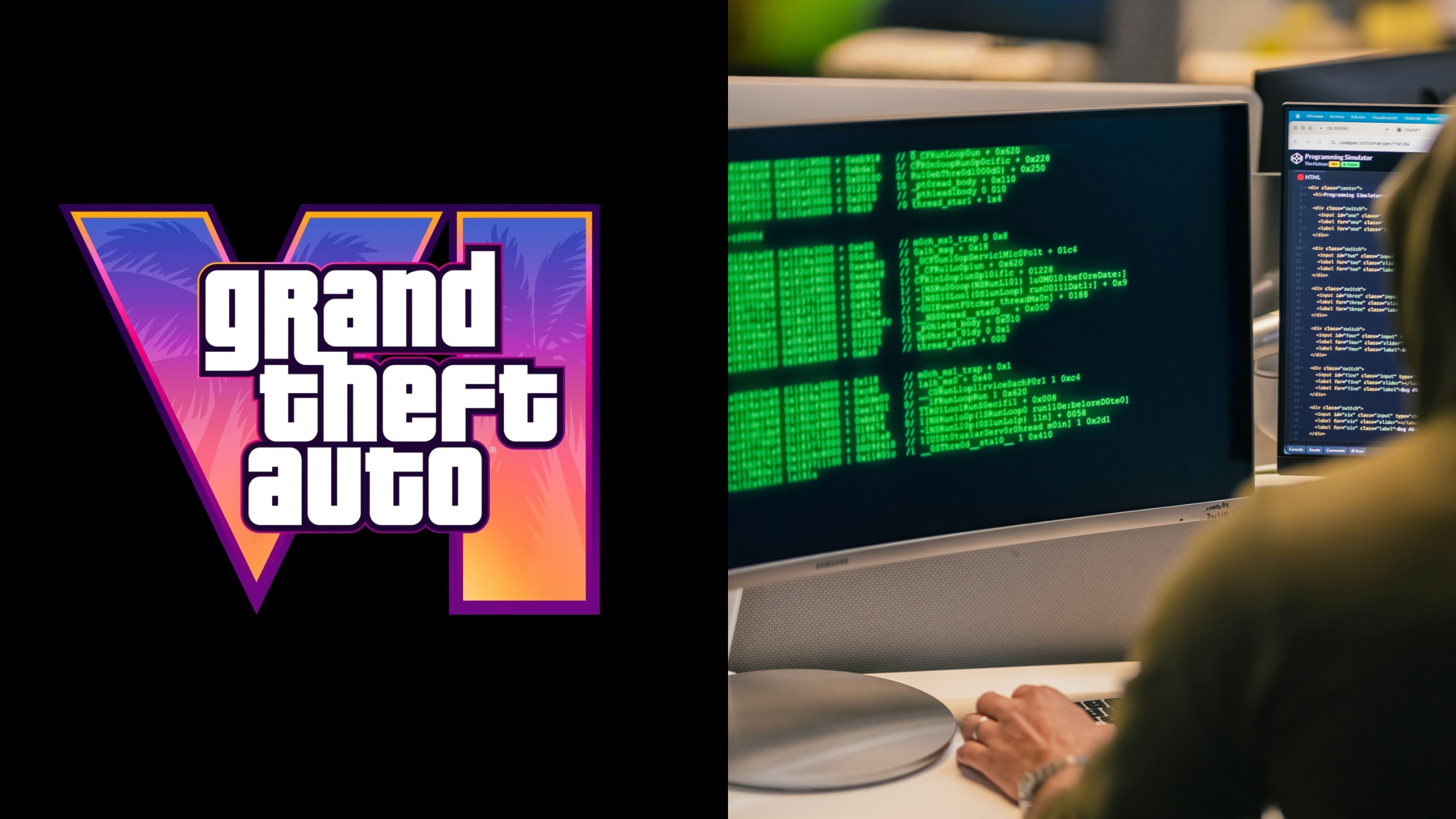
In order to help explain why, we need to consider another major news item this week: the release of the video game Grand Theft Auto VI.
Video Games
Over ten years in the making, Grand Theft Auto VI continues in the series that has made a name for itself by offering players what can only be described as digital degeneracy: while carrying out “missions” and exploring the virtual world, players can spend time stealing cars, shooting bystanders, punching women, visiting strip clubs, and running from the police, among other nefarious activities. It’s essentially a game that offers its users the kinds of malicious actions that they crave in real life (but are restrained more or less only by the threat of prison time or lack of opportunity and resources). Slated to be the biggest entertainment release of all time (reaching nearly $2 billion in pre-sales and estimated to hit a staggering $30 billion in sales by the end of the year!), it’s clear that the world is eagerly looking forward to acting out its evil desires in a simulated environment.
Setting the in-game immorality aside, this juvenilization of society has its real-word costs. Scripture warns that a society is in grave danger when it’s ruled by children (cf. Isa. 3:12), and although becoming the U.S. President still requires a minimum age of 35, the fact of the matter is that teens and twenty-something influencers are the ones who are having a very real impact on the direction of the nation. Gone are the days when young men, in particular, are encouraged to pursue careers that benefit not only themselves, but also society and its way of life. Plumbers, carpenters, electricians, linemen, welders, machinists, and mechanics are in short supply, as anyone in those trades will quickly tell you. Instead, young men have remained in perpetual adolescence, opting to become live-streamers, YouTubers, and influencers. A recent survey asked kids between the ages of 6 and 17 years old what they wanted to be when they grow up, and the top five answers were as follows:
YouTube star
Blogger or vlogger
Musician or singer
Actor
Film maker
One influencer, who goes by the name “Clavicular,” has quite cleverly managed to monetize his own insecurities by building a brand based on his bizarre journey of self-improvement. He goes so far as to recount a time when he was lifting weights at a gym but decided to leave the moment someone with a better physique walked in because it was emotionally unbearable (a phenomenon he calls “mogging”). Replete with an entire lexicon of words to describe aesthetic evaluations, social situations, and excessive self-preoccupation, Clavicular’s impact on the youth of society is undeniable. Having coining and popularized the term “looksmaxxing” to describe his effort to make the most of his appearance, Dictionary.com has officially named the term “maxxing” as the 2026 Word of the Year.
Make no mistake about it: this spells disaster for a country. Folly can only be commercialized for so long. Proverbs 6:10-11 warns, “‘A little sleep, a little slumber, a little folding of the hands to rest’—your poverty will come in like a vagabond and your need like an armed man.” And although that proverb is directed to an individual, we’re seeing that paradigm play out on a societal level. Spend your time in leisure and you better buckle up, because reality will smack you in the face.
When everyone wants to be a clown, everyone ends up in clown world.
The Juxtaposition
So, what do these things have to do with one another? Getting back to the freezer cyber attack specifically: the outcome of a nation’s drastic shift in career priorities, combined with the general decrease in its population, means that there are far fewer people available to maintain valuable assets. A society that exalts frivolity ends up with far fewer productive workers for monitoring critical infrastructure. A lack of productive workers subsequently means that remote, internet-based computer systems must be implemented in order to fill the void, in order to assist that ever-shrinking workforce in adequately monitoring those systems. That’s, in part at least, the answer as to why freezers would ever need to be on Wi-Fi. There simply aren’t enough qualified personnel to go around with a clipboard, checking freezer temperatures, when everyone wants to be the next TikTok star. Why be an HVAC technician when you can earn money posting cat memes? And in the end, technological dependency becomes technological vulnerability.
Ultimately, those who decry the cyber security issues that arise from the use of automation and digital monitoring, while letting their children grow up to be lazy, misguided, unproductive consumers in society, are, quite frankly, hypocrites. In the span of a single week, we have the release of the largest entertainment product of all time right on the heels of what, by all accounts, appears to be the brave new world of AI assaults, disruptions in critical infrastructure, widespread unintended outages, and an untold number of other threats to our general way of life.
We find ourselves staring at an existential juxtaposition: the wind we’ve sown and the whirlwind we’re reaping (cf. Hos. 8:7). We’re simultaneously planting and harvesting foolishness. The nation is gaming while it’s crumbling. I suppose if Nero were here today, he wouldn’t be fiddling while the U.S. burns—he’d be swiping.
Comfort One Another
As Christians, the good news is that our faith is not based on societies improving over time. Contrary to the misguided optimism of our Postmillennialist friends, Scripture couldn’t be more clear that the world will only get worse (cf. 2 Tim. 3:13, Matt. 24:12). If you think inflation is bad now, just wait until your purchasing power drops tenfold (cf. Rev. 6:6). If you think population decline is bad now, just wait until there are seven women competing for a relationship with one man (cf. Isa. 4:1). If you think deepfakes and misinformation are bad now, just wait until the deception is supernaturally empowered by Satan (cf. 2 Thess. 2:9).
But here’s the plot twist: as a Christian, you don’t need to worry about it, because you won’t be there to experience it.
Although the world is headed for a seven-year tribulation period in which horrific worldwide judgment will take place, the glorious reality for believers is that we will be raptured—taken, bodily, up in the air to be with Christ—before it begins (cf. 2 Thess. 2:3). That’s why the Apostle Paul tells us, “For the Lord Himself will descend from heaven with a shout, with the voice of the archangel and with the trumpet of God, and the dead in Christ will rise first. Then we who are alive and remain will be caught up together with them in the clouds to meet the Lord in the air, and so we shall always be with the Lord. Therefore comfort one another with these words” (1 Thess. 4:16-18).
So, if the latest headlines have your head spinning, find your balance in God’s Word. Study Scripture. Make disciples, both at home, at church, and in the world. Get the Gospel to the lost. Pray for God’s kingdom to come, and then eagerly await Christ’s return to establish it and make all things right. Be comforted!