
Should Christians Support Modern Israel?
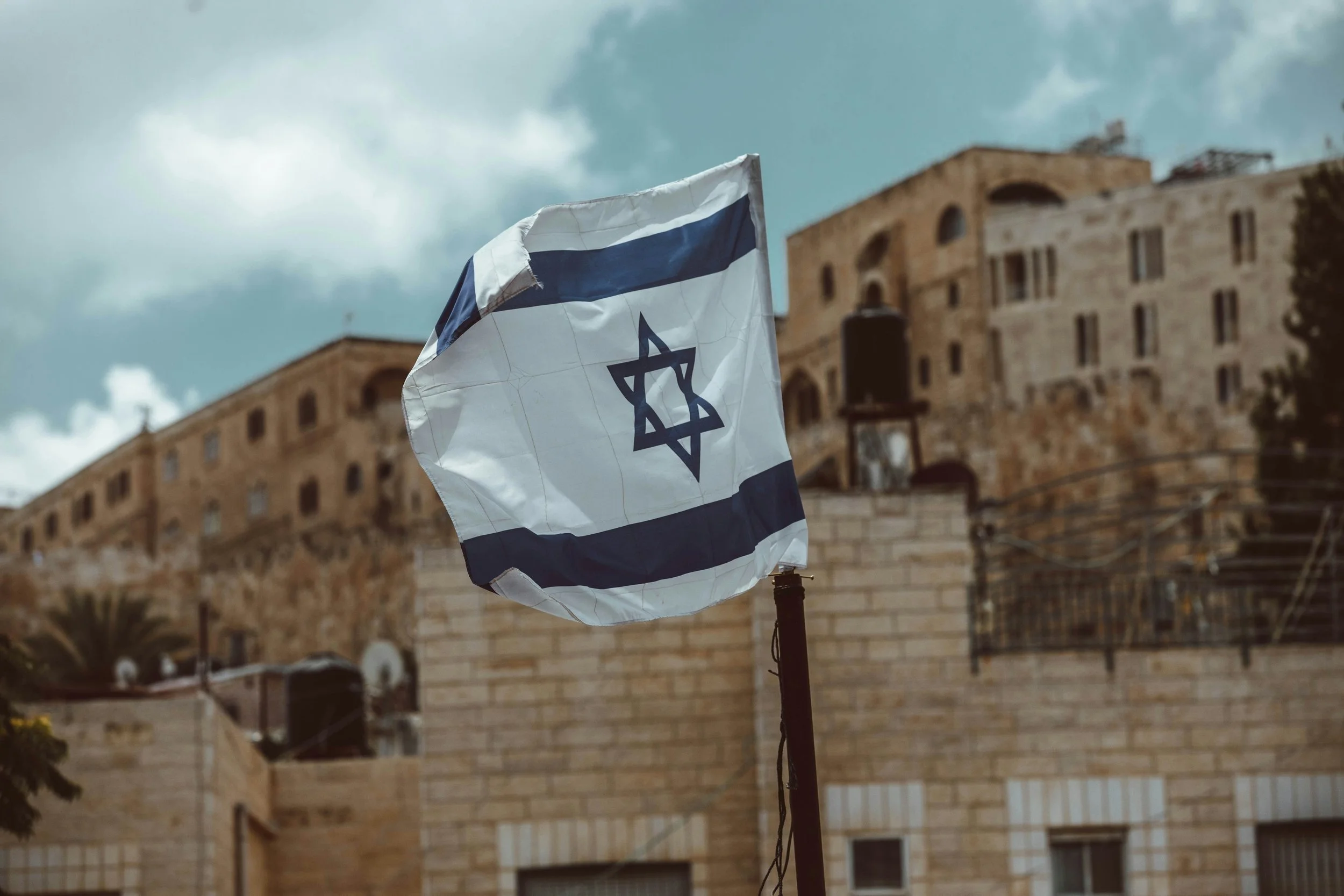
Few topics stir more confusion among Christians today than the question of modern Israel. Conflicts in the Middle East seem to occur constantly. Headlines provide narratives on both sides. Political voices grow loud. And many believers quietly wonder: What does the Bible actually say?
And yet, when it comes to the topic of Israel, Scripture requires us to think carefully, speak clearly, and refuse both political sensationalism and theological reductionism.
So the question stands: Should Christians support modern Israel?
To answer that faithfully, we need to begin with biblical clarity about who Israel is—and who Israel is not.
The Identity of Modern Israel
Who are We Talking About?
Any conversation about supporting Israel must begin with clarity about who Israel actually is. And this is where many misunderstandings begin. Some speak of modern Israel as though it’s completely disconnected from the Scriptures, while others speak as though its existence automatically fulfills every prophecy in the Old Testament. Scripture, however, demands a more careful approach.
First, we must say this plainly: the Jewish people living in modern Israel are the same ethnic descendants of Abraham, Isaac, and Jacob that we meet throughout the Old and New Testaments. This is not an opinion. It is a historical, genealogical, and biblical reality. So, when the Bible speaks of ethnic Israel, it is referring to the same Jewish people who are alive today.
To understand this continuity, it’s helpful to recognize how the modern nation came into existence. After centuries of dispersion following the fall of Jerusalem in AD 70, Jewish communities lived scattered among the nations. Yet remarkably, unlike every other people group exiled in ancient times, they maintained their identity, language, customs, Scriptures, and memory of the land God gave them. Other empires rose and fell. Borders shifted countless times. But the Jewish people remained a distinct people.
By the late nineteenth and early twentieth centuries, Jewish migration back to the land increased significantly. After the horrors of the Holocaust and World War II, nations across the world recognized the necessity of a homeland for the Jewish people. In 1947, the United Nations approved a plan to establish a Jewish state in the land of their ancestors. And on May 14, 1948, the nation of Israel declared its independence, and Jewish people from around the world began returning home in large numbers.
Nothing about this development was accidental or artificial. The people who had once been scattered were now gathered. The descendants of Abraham were dwelling again in the land promised to their fathers.
So, it’s important to understand that when we speak of “modern Israel,” we’re not speaking about a symbolic idea or a political concept. We’re speaking about the Jewish people themselves—the very people God called, shepherded, disciplined, scattered, preserved, and to whom He made irrevocable promises. Modern Israel is ethnically and historically the same Israel of Scripture, living once again in the land of their fathers.
Understanding this identity is the foundation for everything else Scripture teaches about Israel. If we get this wrong, everything that follows will be distorted. But if we get this right, the rest of the biblical storyline begins to take shape with clarity and confidence.
The Spiritual Condition of Modern Israel
How Should We View Israel Today?
Recognizing that modern Israel is the same ethnic Israel of Scripture is only the first step. Scripture also requires us to acknowledge a second, equally important truth: Although Israel today is the same people God chose in the Old Testament, Israel is not yet the spiritually restored nation promised in the New Covenant.
This distinction is not a political opinion but a biblical reality. The apostle Paul explains Israel’s current condition in one of the clearest statements in all of Scripture:
“A partial hardening has happened to Israel…” (Romans 11:25).
Notice the precision of Paul’s language:
Partial: Not complete or permanent
Hardening: Not destruction or annihilation
Has happened: An action in the past impacting the present
To Israel: Not to the Church, not to the nations, but specifically to the ethnic descendants of Abraham.
This means that while Israel remains part of God’s chosen people, the majority of Jewish people today do not believe in Jesus as their Messiah. They possess the Scriptures (Romans 9:4). Yet they remain, spiritually speaking, in unbelief.
If you feel a bit of tension in this reality, you’re not alone. In fact, Paul experienced it firsthand. He loved his fellow Israelites deeply. He even wept for them and prayed for their salvation:
“My heart’s desire and my prayer to God for them is for their salvation” (Romans 10:1).
We need to really let that sink in. The same people who received the Law and the prophets, the same people through whom Christ came, and the same people who remain central to God’s redemptive plan are, at present, largely blind to the gospel.
But that blindness is not without purpose. Paul explains that Israel’s current unbelief is neither accidental nor permanent:
It is partial—because there is always a believing remnant.
It is purposeful—because it opens the door for the gospel to go to the nations.
It is temporary—lasting only “until the fullness of the Gentiles has come in” (Romans 11:25).
This is why we cannot speak of modern Israel as though it’s already the renewed, Spirit-filled people described in Jeremiah 31 or Ezekiel 36–37. Those passages describe a future generation of Israel who will receive a new heart, walk in obedience, be gathered in repentance, and know the Lord intimately. But that promise has not yet been fulfilled on a national scale.
Israel today, therefore, is the same people, but not yet the same spiritually transformed nation they will one day become. Their identity is unchanged. Their covenant destiny is unaltered. But their spiritual condition remains unsaved.
And this is the reality that must shape how Christians view Israel in the present moment. We honor their identity because God does. We pray for their salvation because Paul did. We reject any doctrine that dismisses their significance. But we also refuse to pretend that modern Israel is already experiencing the blessings of the New Covenant.
Israel’s story isn’t finished. The same God who preserved them through centuries of dispersion has promised to open their eyes in His perfect time. And until that day, we view Israel with both gratitude (for their heritage) and longing (for their future).
Just as Paul said, “As regards the gospel, they are enemies for your sake. But as regards election, they are beloved for the sake of their forefathers” (Romans 11:28).
The Future of Israel
What Does God Still Plan to Do?
Since Israel today is the same people we meet in Scripture, but is presently in a state of partial unbelief, then the obvious question follows: What will God do next? How does the biblical storyline unfold from here?
Paul answers this question with breathtaking clarity in Romans 11. In fact, Romans 11 is not a side note or an obscure detail in the New Testament; it is the Spirit-inspired explanation of Israel’s past, present, and future. And Paul’s main point could not be more direct: God is not done with Israel.
The Apostle begins with a question that cuts to the heart of the issue:
“God has not rejected His people, has He?” (Romans 11:1)
And his answer is immediate and emphatic:
“May it never be!”
In other words, using the strongest possible language, Paul rejects the idea that Israel’s unbelief means God has abandoned them. To the contrary, Paul argues that Israel’s future is guaranteed because God’s promises are guaranteed.
Three realities shape Paul’s entire argument:
God’s Faithfulness to Israel Has Not Failed (Romans 11:1–6)
Even in Israel’s darkest moments—exile, dispersion, idolatry—God always preserved a remnant. In Paul’s day, that remnant included Jewish believers like himself. Their existence was not an accident but a reminder that God always keeps a people for Himself.
If God preserved a remnant in the past, He will preserve one in the future.
Israel’s Hardening Is Partial and Temporary (Romans 11:25)
Paul describes Israel’s current unbelief as a divine mystery:
“I do not want you to be ignorant of this mystery, brothers and sisters, so that you may not be conceited: Israel has experienced a hardening in part until the full number of the Gentiles has come in.”
That word until matters. It’s a hinge on which the entire prophetic timeline rests. Israel’s unbelief has an expiration date. God is saving a people from every nation through the gospel, and when that global mission reaches its fullness, the veil that lies over Israel’s heart will be lifted.
This means Israel’s restoration is not just possible—it’s irrevocable.
God Will Save Israel in the Future (Romans 11:26–27)
Paul’s conclusion is astonishing:
“And so all Israel will be saved.”
Contrary to many who err on this point, it’s clear from the language that “Israel” here does not mean the Church. And it doesn’t mean a symbolic people. It means the same Israel Paul has been talking about since Romans 9, which are the ethnic descendants of Abraham who currently remain in unbelief.
The same Israel currently hardened will one day repent.
The same Israel currently scattered in unbelief will be gathered in faith.
The same Israel who rejected her Messiah will look upon Him whom they pierced, mourn, and believe (Zechariah 12:10).
Far from replacing Israel, the gospel ensures Israel’s future redemption.
And Paul then concludes the chapter with the reason this will happen:
“The gifts and the calling of God are irrevocable” (Romans 11:29).
In other words, the God who chose Israel, called Israel, and covenanted with Israel has not changed His mind. Their future is not based on their faithfulness but on His.
This is why modern Israel matters. This is why Israel’s identity matters. And this is why believers cannot dismiss Israel’s role in God’s redemptive plan.
In other words, Israel today is a living testimony that God keeps His promises, even when His people wander. And Israel’s future will one day be a living testimony that the God who judges also restores, and that the God who scatters also gathers.
So, while the story of Israel isn’t yet complete, the ending has already been written. And therefore Christians should rejoice in the God who has promised to finish what He started.
The Christian’s Posture Toward Israel
What Does Faithfulness Look Like Now?
This is where many believers feel the tension. On the one hand, we reject political sensationalism and prophetic speculation. On the other hand, we resist any theology that dismisses Israel’s significance or erases its place in God’s redemptive plan.
In light of this, Scripture gives us a posture that is neither indifferent nor uncritical. God’s Word provides us with a way to stand in both truth and love at the same time.
Here are the four pillars of a faithful Christian posture toward Israel today:
We Honor Israel Because God Honors Israel
This isn’t about politics, but about Scripture. Paul calls the Jewish people:
“beloved for the sake of the fathers” (Romans 11:28).
Notice that Israel isn’t beloved by God because of their righteous behavior. They’re not beloved because of national decisions. And they’re not considered beloved because of geopolitical alliances. They’re beloved because of God’s covenant commitment.
The same God who chose them still calls them beloved, even in their unbelief. This does not mean that unbelieving Jews are in a right relationship with God. Any Jewish person who dies in their unbelief will spend eternity in hell. But what it does mean is that God has a special purpose for the Jewish people, which will culminate in the salvation of many in His great redemptive plan.
We Pray for Israel Because Scripture Commands It
Psalm 122:6 says:
“Pray for the peace of Jerusalem.”
Although many politicians use this verse for political purposes, it’s important for us to recognize that this is not primarily a political slogan. Rather, it’s an act of obedience rooted in biblical hope.
The ultimate peace of Jerusalem will not come through treaties, military strength, or diplomatic negotiation. It will come when the Prince of Peace returns and reigns.
Praying for Jerusalem is praying for Christ’s kingdom to come, and for the Prince of Peace to reign in the hearts of those who repent and believe in Him.
We Reject Antisemitism in Every Form
Every believer must understand this with absolute clarity: Antisemitism is a sin against God.
It’s hatred toward the very people through whom Christ came. It’s hostility toward the people God preserved, protected, and promised to restore. And it’s dishonoring the people Paul longed to see saved.
Christians cannot tolerate, excuse, or downplay any form of anti-Jewish hatred, whether cultural, political, academic, or social.
On the contrary, our posture must always be one of dignity, compassion, and gospel-driven love.
We Long for Israel’s Salvation Because Paul Did
Paul’s heart toward Israel is instructive:
“My heart’s desire and my prayer to God for them is for their salvation” (Romans 10:1).
Notice that Paul didn’t merely acknowledge Israel’s future; he yearned for it, hoped for it, prayed for it, and evangelized with it in view. And Christians should feel the same burden.
Supporting Israel biblically is not primarily about defending its borders—though their right to live in their land is important—it’s about longing for hearts to turn to their Messiah. It’s about praying for the veil to be lifted. And it’s about hoping for the day when a nation looks upon the Lamb and believes.
That is the deepest, most distinctly Christian support we should offer.
Biblical Support Is Not Blind Support
So, what does it look like to love Israel biblically? Well, it doesn’t mean endorsing every governmental decision or military response. Israel, like every nation, is led by imperfect leaders and governed by fallen people. Scripture doesn’t demand uncritical political alignment.
What Scripture does demand is:
Clarity about Israel’s identity
Faithfulness to God’s promises
Love for the Jewish people
Rejection of hatred
Prayer for peace
Commitment to the gospel
Biblical support is not nationalistic endorsement; it is covenantal awareness and gospel-shaped love. We stand with Israel’s identity, we hope in Israel’s future, and we pray for Israel’s salvation, all while maintaining the discernment Scripture requires of us.
The Hope of Israel
Where is Israel’s Hope to be Found?
After considering Israel’s identity, Israel’s present unbelief, and Israel’s future restoration, it becomes clear that our hope is not in the strength of any earthly nation. Our hope is in the return of Jesus Christ. The story of Israel is ultimately the story of the God who saves.
The same God who scattered Israel will gather them.
The same God who disciplined Israel will restore them.
The same God who allowed Israel’s unbelief will grant their repentance.
The same God who judged Israel will forgive them.
And the climax of that story is not just geopolitical peace in the Middle East. It is the gospel. The same gospel that has been saving sinners from every tribe and tongue is the gospel that will one day open the eyes of Israel. The same gospel that brought us from death to life will bring an entire nation to repentance. The same Messiah who saved Gentiles through Israel’s unbelief will save Israel through His unstoppable grace.
This is why Christians support Israel with clarity and conviction; not because Israel is righteous, but because Christ is. Not because the nation of Israel is the hope of the world, but because the Savior who came through Israel is the hope of the world.
And that hope is unshakable.
A crucified and risen King.
A gospel that opens blinded eyes.
A kingdom that cannot be stopped.
A salvation that reaches to the ends of the earth.
One day soon, the veil will be lifted, the remnant will rise, and the promises of God will burst into reality. Israel will behold her Messiah. The nations will bow in worship. And the glory of God will cover the earth as the waters cover the sea.
Until that day, we pray, we preach, we love, and we hope—because the gospel that will save Israel is the same gospel that saved us, and it is that gospel that will one day renew the world.